Exercise Bike Data Privacy: How Brands Share Your Health Data
By Diego Santos • 7th Dec
Let's get real: your exercise bike knows more about you than your doctor. From heart rate fluctuations to pregnancy status (even, shockingly, how you smell), modern connected bikes harvest intimate health details under the guise of "personalized fitness". But as Consumer Reports found in their recent investigation, exercise bike data privacy is often an illusion, while fitness data security feels like an afterthought. If you're nodding along while pedaling quietly at 6 a.m., this is your wake-up call. Because the best home gym setup isn't just about killer workouts, it's about keeping your data yours.
Why Your Spin Bike Is a Data Magnet
Most riders assume their bike tracks only cadence, resistance, and distance. But behind the scenes, smart equipment gathers startlingly personal intel:
- Biometric breadcrumbs: Heart rate, calories burned, sweat patterns (yes, sweat), and even posture via cameras
- Lifestyle clues: Pregnancy status (Peloton's policy), dietary habits, sleep correlations
- Location whispers: Routes for outdoor-connected bikes (like outdoor cycling apps), home address via shipping data
When Consumer Reports scrutinized top brands, they uncovered BowFlex's policy granting rights to "olfactory data" (fancy talk for how you smell). Tonal admits to collecting pregnancy status. And that Swedish royal bodyguard scandal? Strava's public map revealed secret residences. This isn't dystopia, it's Tuesday for your fitness app. If you're new to connected bikes, our smart bike basics guide explains how sensors, apps, and data sharing actually work.
The Hidden Data Pipeline
Here's where your intimate metrics often end up:
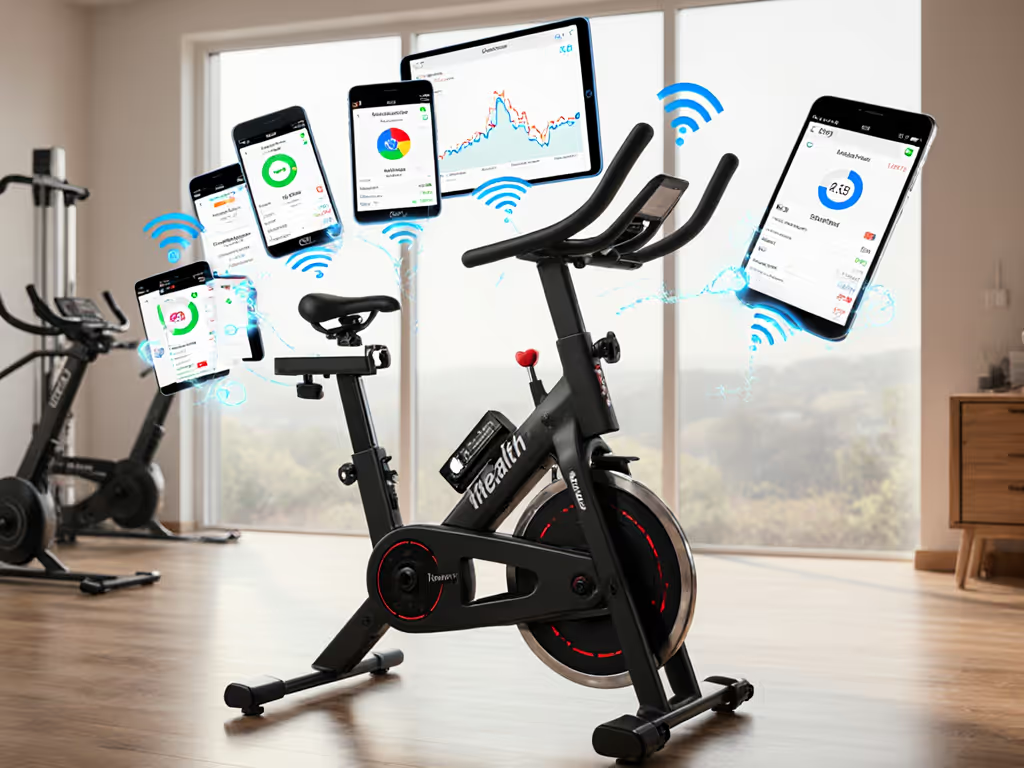
Your data flows like water: collected by the app, filtered through marketing partners, and sold to data brokers, even if you "opt out".
While companies like Peloton claim they "don't sell data to brokers", their privacy policies (as CR confirmed) allow using your health data for marketing. Others share with affiliates who legally "sell" under California law. Why? Because until recently, your cycling stats held the same legal weight as your shoe size, not protected health information.
GDPR Compliance Fitness: How the EU Leads (And Why You Should Care)
If you're outside Europe, your data gets fewer shields. But EU rules like GDPR force brands to treat health data seriously. Here's the split:
| Region | Health Data Protection | User Control | Default Privacy |
|---|---|---|---|
| EU | Treated as high-risk (GDPR) | Easy deletion access | Strict consent required |
| US | Patchy state laws (CCPA) | Buried in settings | Often public by default |
Take Hydrow: in the EU, your workout map stays private. In the US? Public unless you hunt down settings. Tonal stores form-correcting videos (only if you save them), they say, but deletes take manual work. Contrast this with Apple Fitness+, where data never leaves your device unless you invite it out. That's app-agnostic done right. To compare ecosystems (features, costs, and data approaches), see our smart platform comparison.
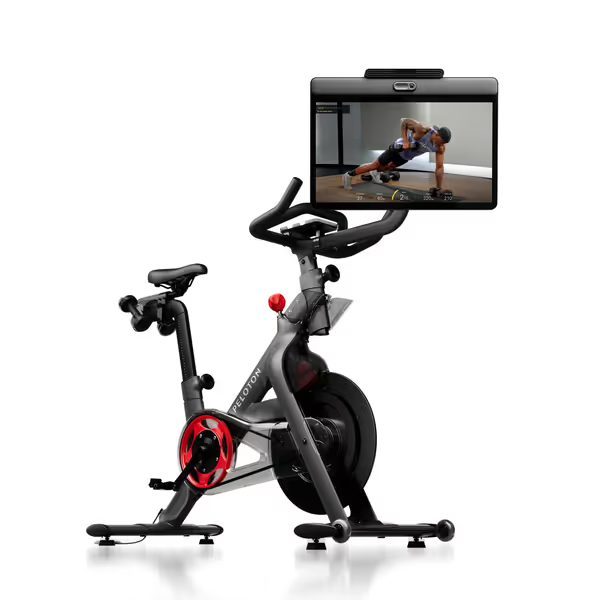
Peloton Bikes
Smart, engaging cardio and strength training with real-time feedback.
$1995
Membership Cost$49.99/month (required)
Membership Cost$49.99/month (required)
Pros
Personalized guidance & real-time form correction with Peloton IQ.
360° HD swivel screen for diverse workouts (strength, yoga, etc.).
Engaging content with live and on-demand classes for motivation.
Cons
Mandatory, costly monthly membership subscription for full features.
Customers find the stationary bike to be a high-quality piece of workout equipment that provides an engaging and motivating fitness experience with a wide range of on-demand and live classes. They appreciate its ease of use, with clear instructions and the ability to complete workouts quickly when time is limited. While some customers say the setup is easy enough, others find the DIY assembly difficult. The bike's functionality receives mixed feedback, with some saying it performs wonderfully while others report it doesn't work at all, and opinions on value for money are divided between those who find it worth the price and those who consider it pricey.
Customers find the stationary bike to be a high-quality piece of workout equipment that provides an engaging and motivating fitness experience with a wide range of on-demand and live classes. They appreciate its ease of use, with clear instructions and the ability to complete workouts quickly when time is limited. While some customers say the setup is easy enough, others find the DIY assembly difficult. The bike's functionality receives mixed feedback, with some saying it performs wonderfully while others report it doesn't work at all, and opinions on value for money are divided between those who find it worth the price and those who consider it pricey.
Your Privacy Settings Comparison Cheat Sheet
Don't panic, yet. Every major brand offers privacy controls. You just need to find them. Based on real rider testing, here's where to click:
Peloton
- Where: Account > Privacy Settings > Profile Visibility
- Fix: Toggle "Public Profile" OFF and disable location sharing. For pregnancy workouts, CR verified Peloton doesn't assume health status, but your participation history remains.
- Pro tip: Their "One-Time Opt-Out" link (in marketing emails) blocks data sharing, but doesn't delete existing files.
Echelon
- Where: App Settings > Account > Privacy
- Fix: Disable "Share workout achievements" and "Collect usage data". Their free 30-day membership (included with bikes) funnels data to Echelon Fit, so opt out during setup.
- Reality check: Limited granular controls. Once shared, data deletion requires emailing support.
Strava & Kinomap
- Critical: Always set activities to "Private" before saving. Public is default, a flaw exposed in the Sweden incident.
Defaults beat willpower. Spend 90 seconds locking these settings now. It's the frictionless win that compounds.
3 Tiny Steps to Reclaim Your Data (Without Quitting)
You don't need to ditch your bike. Just optimize quietly, like adjusting saddle height:
Step 1: Deploy CR's Permission Slip (Free Tool)
- This tool auto-requests data deletion from 10+ brands (Peloton, BowFlex, Tonal) in one click. It's like a mute button for your data footprint, no coding needed. Found it via CR's investigation? Yes. But it's free, and it works.
Step 2: Treat Apps Like Guests
- Only install one core app (e.g., TrainerRoad for power training). Use Bluetooth FTMS to connect bikes without brand apps. To avoid vendor lock-in and keep control of your data, choose hardware from our fitness API compatibility guide. Your bike broadcasts data; let your favorite app receive it, not the other way around.
Step 3: Audit Quarterly
- Set a calendar reminder: "Data Cleanse Sunday". Review permissions like checking tire pressure, routine maintenance for peace of mind. Look for:
- New third-party app connections
- Location permissions re-enabled after updates
- "Anonymous" data sharing boxes ticked by default

Why Simple Beats "Smart" (My Neighbor's Proof)
I once trained a rider who stalled for years on his Peloton. Too many choices. Too much noise. We ditched the bundled screen, paired his humble tablet with a Bluetooth bike, and set three default workouts. We’ve tested open-platform smart bikes that stay quiet, accurate, and work with any app—no walled garden required. No decisions. No drama. Four weeks later, he bought pedals, not subscriptions. Why? Momentum thrives when setup friction disappears. His data stayed local. His focus stayed sharp.
That's the quiet truth: your privacy isn't about fancy encryption. It's about consistency. The bike you ride daily (the one with minimal data hooks) is the one protecting you most. Because the best security isn't locked in a vault; it's never leaving your device.
Start small, stay quiet, and compound the wins. Your data deserves that much.
Related Articles