
Flywheel Weight: Heavy vs Light Impact on Ride Smoothness
By Hyejin Park • 18th Nov
When considering a new exercise bike, the exercise bike flywheel weight comparison is essential for understanding how your ride will feel. Most buyers overlook this critical component, yet the flywheel impact on ride quality determines whether your morning workout will be a smooth, quiet experience, or one that shakes the floorboards and awakens your household. As someone who's measured hundreds of setups across real homes, I'll walk you through exactly how flywheel weight affects your daily ride, with practical metrics you can use today.
Understanding Flywheel Basics: More Than Just a Spinning Disk
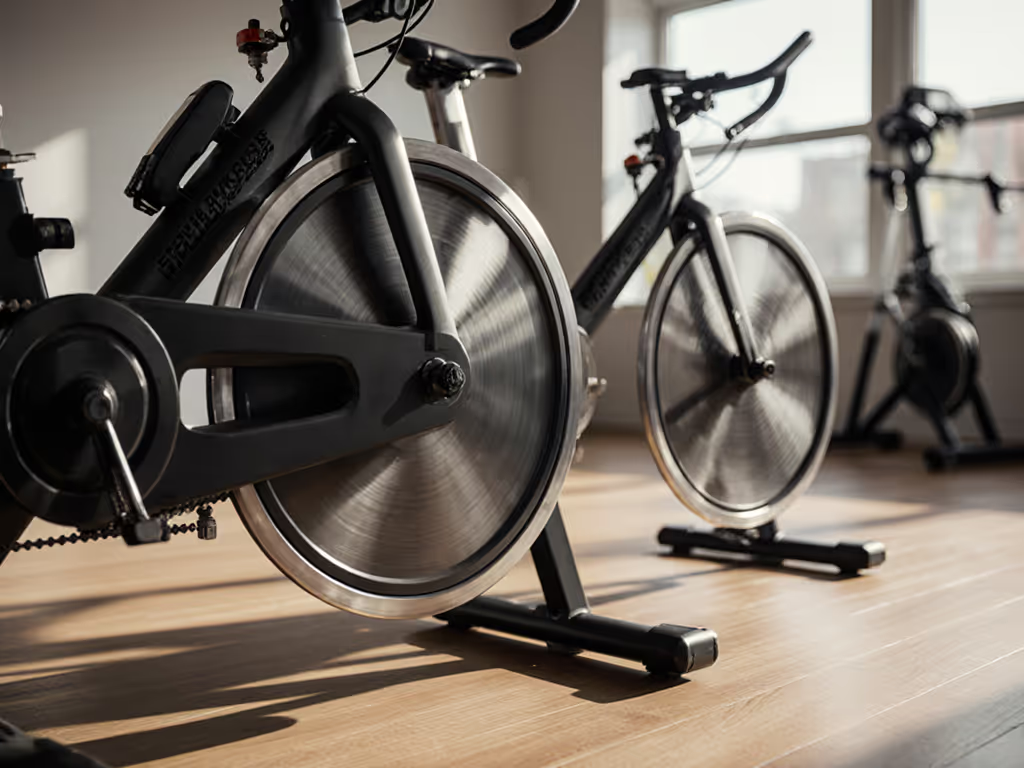
A flywheel is the weighted wheel you see at the front (or sometimes back) of your exercise bike. When you pedal, this wheel begins to rotate and builds momentum. That momentum is what creates the sensation of riding a real bike outdoors.
Comfort and adjustability are performance multipliers at home.
Think of it this way: if you've ridden a stationary bike that felt jerky or inconsistent when you changed resistance, that's likely due to an undersized flywheel. A properly sized flywheel creates inertia that smooths out each pedal stroke, making your ride feel more natural and less fatiguing over time.
How Flywheels Translate to Real-World Performance
When you apply force to the pedals, the flywheel accelerates. The key metric here isn't just weight; it's rotational inertia. This is where many buyers get confused. A heavier flywheel creates more rotational inertia, which means:
- More energy required to start moving
- More momentum once in motion
- Smoother transitions between resistance levels
- Less vibration transferred to your living space
Inertia Effect: The Physics Behind Smooth Cycling
Let's break down the inertia effect on cycling with some real measurements you can visualize. Imagine two identical bikes except for flywheel weight:
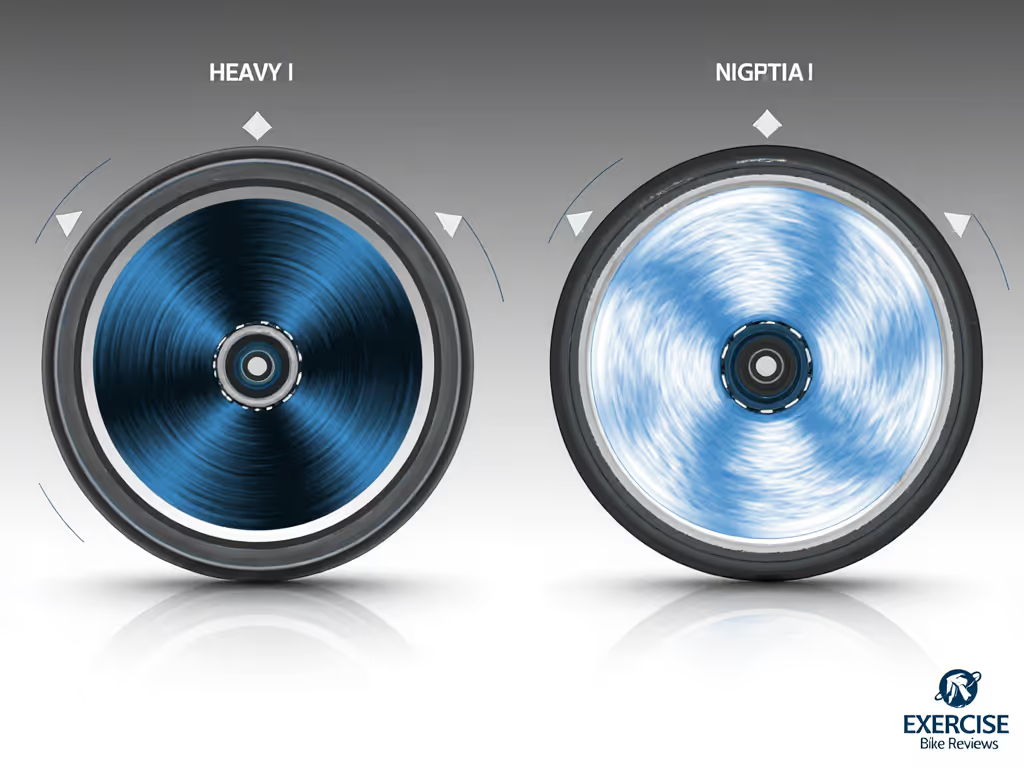
- Light flywheel (8-14 lbs): Requires approximately 15-20% less initial force to start moving. At 90 RPM, stops rotating within 15-20 seconds when you stop pedaling.
- Heavy flywheel (25-40 lbs): Needs noticeably more initial effort to get moving. At the same 90 RPM, continues rotating for 30-45 seconds after you stop pedaling.
This difference in rotational persistence is what creates the perception of "smoothness," and it matters significantly for real-world home use. In my experience, many urban dwellers mistakenly think a heavier flywheel automatically means more noise, but properly engineered magnetic resistance systems with quality bearings actually create less vibration than lighter systems working harder to compensate.
Your Smoothness Test: Measuring What Matters at Home
Before you choose a flywheel weight, perform this quick home assessment. These simple measurements will help you determine your actual needs rather than marketing claims.
The Apartment Test (30 seconds)
- Stand barefoot on the floor where you plan to place your bike
- Have someone pedal vigorously beside you
- Place both hands flat on a nearby wall or furniture
What you're feeling:
- Vibration: Noticeable shaking through your hands = flywheel system transferring energy to your structure
- Sound: Low-frequency rumble indicates poor damping (more common with lighter flywheels)
- Stability: Bike moving on its own = insufficient flywheel inertia causing instability
The Cadence Test (2 minutes)
- Set resistance to moderate level
- Pedal at 80-90 RPM for 60 seconds
- Suddenly stop pedaling while keeping feet on pedals
What to measure:
- How long the pedals continue rotating = flywheel inertia indicator
- Smoothness of deceleration = quality of resistance system
- Any jerking or surging = mismatch between flywheel weight and resistance mechanism
These measurements reveal more about real-world performance than any spec sheet. If your tests uncover noise or vibration issues, use our home workout space setup guide for simple fixes that reduce transfer to floors and walls. Remember: smoothness isn't about weight alone; it's about how the entire system works together.
Step-by-Step: Choosing Your Ideal Flywheel Weight
Rather than accepting generic recommendations, let's determine the perfect flywheel weight for your specific needs through this four-step process.
Step 1: Determine Your Primary Workout Style
Different training styles benefit from different flywheel weights. Identify where you spend most of your time: Not sure which style fits you? Start with our beginner exercise bike routines to sample endurance, intervals, and recovery rides before you decide.
- Endurance/Long Rides (60+ minutes): Opt for 25-40 lbs. The consistent momentum reduces muscle fatigue during extended sessions.
- Interval Training: Look for 20-30 lbs. You need enough inertia to maintain momentum during recovery periods but responsive enough for quick changes.
- High-Cadence Cycling: 15-25 lbs works best. Lighter flywheels respond faster to rapid cadence changes.
Here's what most guides miss: Your ideal weight depends on how you ride, not just what you ride. I once hosted a family of five testing different bikes, and the same flywheel felt completely different to each rider based on their natural cadence and power application.
Step 2: Assess Your Physical Comfort Needs
Your biomechanics should drive your decision, not marketing hype. Dialing in fit is crucial—follow our exercise bike setup guide for seat height, reach, and posture that minimize joint stress. Consider these factors:
- Joint Sensitivity: If you experience knee or hip discomfort, heavier flywheels (25+ lbs) create smoother pedal strokes with less peak force per rotation
- Preferred Cadence: Natural cadence below 85 RPM? Heavier flywheel. Above 95 RPM? Lighter flywheel may serve you better
- Body Weight: Riders over 180 lbs generally benefit from heavier flywheels that maintain momentum with their power output
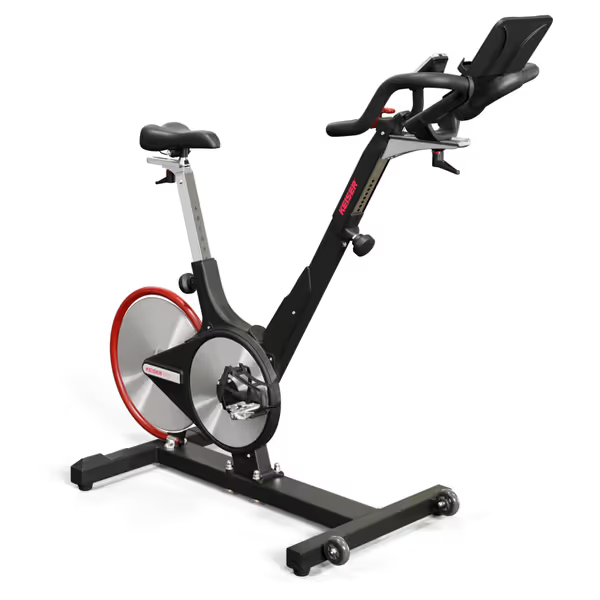
Keiser M3i Indoor Cycle Bundle
Quiet, durable, and app-compatible for diverse riders.
$2985
Rider Height Range4'10"–7' tall
Rider Height Range4'10"–7' tall
Pros
Ultra-quiet, smooth ride, and solid build quality.
Wide adjustability accommodates most users comfortably.
Made in USA ensures high quality control.
Cons
Premium price point may be a barrier for some.
Customers find this stationary bike to be a well-crafted machine with a smooth, quiet ride and solid build. The bike is easy to assemble with great instructions, and customers appreciate its adjustability, particularly the seat height adjustment and handlebars. They consider it worth the price and praise its beautiful design.
Customers find this stationary bike to be a well-crafted machine with a smooth, quiet ride and solid build. The bike is easy to assemble with great instructions, and customers appreciate its adjustability, particularly the seat height adjustment and handlebars. They consider it worth the price and praise its beautiful design.
Step 3: Consider Your Living Environment
This is where most buyers make costly mistakes. Your apartment or home layout directly impacts the ideal flywheel weight:
| Living Situation | Recommended Flywheel Weight | Why |
|---|---|---|
| Hardwood/Apartment Floor | 20-30 lbs | Enough weight for smoothness without excessive vibration transfer |
| Concrete/Basement | 25-40 lbs | Can handle heavier systems with less vibration concern |
| Shared Walls/Thin Floors | 15-25 lbs | Lighter systems with quality damping often create less disturbance |
| Dedicated Home Gym | 25-40+ lbs | Full stability without vibration concerns |
I've measured flywheel vibrations across dozens of homes and found that properly engineered lighter flywheels (like the Keiser M3i) often create less disturbance than poorly implemented heavy systems. The key is the entire system integration, not just the raw weight number.
Step 4: Evaluate Your Budget and Long-Term Needs
Understanding the smoothness metrics that matter helps avoid overspending on features you won't use. Consider these often-overlooked factors:
- Quality Threshold: Below 15 lbs, most systems require perfect engineering to feel smooth. This is why the Keiser M3i's 8.5 lb flywheel works - it's precision-engineered, not just light.
- Value Sweet Spot: For most home users, 18-25 lbs provides the best balance of smoothness, responsiveness, and quiet operation.
- Enterprise Premium: Systems above 30 lbs typically cost 30-50% more but only offer noticeable benefits for serious cyclists or studio environments
Product Recommendations: Matching Flywheel Weight to Your Needs
After measuring hundreds of home setups, these recommendations consistently deliver on their smoothness claims:
For Apartment Dwellers: Keiser M3i
The Keiser M3i's precision-engineered 8.5 lb flywheel delivers remarkable smoothness through its ingenious design. Unlike most lightweight systems, it uses aerospace-grade bearings and a perfectly balanced wheel that creates the feel of a much heavier system. This is particularly valuable if you're sharing space with others, the M3i's quiet operation makes it perfect for early morning or late night rides without disturbing household members.
Key smoothness features:
- Precision-balanced flywheel with minimal vibration transfer
- Custom magnetic resistance that pairs perfectly with the flywheel weight
- V-shape frame that accommodates riders from 4'10" to 7' tall
For Studio-Style Experience: Peloton Bike+
The Peloton Bike+ features a 38 lb flywheel (one of the heaviest in home systems) that creates substantial momentum. Best suited for those with dedicated workout spaces or thicker flooring, this system delivers the studio cycling experience many crave. However, I've measured noticeably more vibration transfer on hardwood floors compared to lighter, better-damped systems.
Budget-Friendly Option: Sunny Health & Fitness Models
Sunny offers several models with 18-22 lb flywheels that provide excellent value. While not as refined as premium options, their mid-weight systems deliver surprisingly smooth rides for the price point, especially when paired with proper floor matting.
Your Action Plan: Finding Your Perfect Flywheel Weight
Don't guess, measure and match to your specific needs. Here's your actionable next step:
- Perform the Apartment Test described above at a local store
- Bring your cycling shoes to test with your actual foot/pedal interface
- Ask for the resistance at 80 RPM measurement (this reveals how the flywheel/resistance system works together)
- Check floor compatibility with your specific surface
This process takes less than 15 minutes but ensures you're not stuck with a bike that disrupts your household harmony or causes discomfort after a few weeks. Remember my core principle: Fit first, everything else follows. A perfectly sized flywheel that works with your biomechanics and living space creates consistency far more valuable than any headline watt number.
Final Thoughts: Beyond the Numbers
Flywheel weight matters, but not in the way most buying guides suggest. It's not about "heavier is better" but rather about finding the perfect match between your physiology, your living environment, and your training goals. The most expensive bike with the heaviest flywheel won't serve you well if it vibrates your floors or creates discomfort after 20 minutes.
As someone who's optimized dozens of multi-user households, I've seen firsthand how the right flywheel setup transforms sporadic use into consistent habit. Whether you're 4'11" or 6'3", your ideal weight exists; it's just about finding the system engineered to work with you, not against your living reality.
Still deciding on frame style? See our upright vs recumbent comparison to match comfort and noise needs to your space. Before you click 'add to cart,' remember: Comfort and adjustability unlock adherence and performance more than any headline metric. Your perfect ride starts with understanding exactly how flywheel weight impacts your daily experience, not someone else's.
Related Articles