Smart Bikes for PT: Accuracy, Fit & Data Freedom
By Diego Santos • 8th Apr
If you're shopping for a smart exercise bike that won't lock you into one app, blast your partner awake at 5 AM, or drain your wallet in hidden subscription fees, you're asking the right questions. The market is crowded, the noise claims don't always match real apartments, and vendor lock-in is real. This guide cuts through the noise (literally and figuratively) to help you find a cycling gym equipment setup that works with your life, not against it.
Why Smart Bikes Matter for Real Homes
The appeal of a smart bike is straightforward: accurate power and cadence data, seamless app switching, and feedback that actually helps you improve. But most marketing sidesteps the friction that matters in a shared home. A neighbor I worked with spent two years researching bikes, paralyzed by specs. We ditched the idea that he needed the "complete" bundled system. Instead, we grabbed a simple, solid bike, paired it with a humble tablet, leveled the frame on rubber pucks for vibration dampening, and set three default workouts. No decisions, no drama. Four quiet weeks later, his streak was intact (and he'd bought better pedals, not another subscription).
That's the lesson: defaults beat willpower. The best bike is the one you'll use quietly, consistently, and without friction. Let's build that picture together.
FAQ: Finding Your Fit
What makes a bike "app-agnostic," and why does it matter?
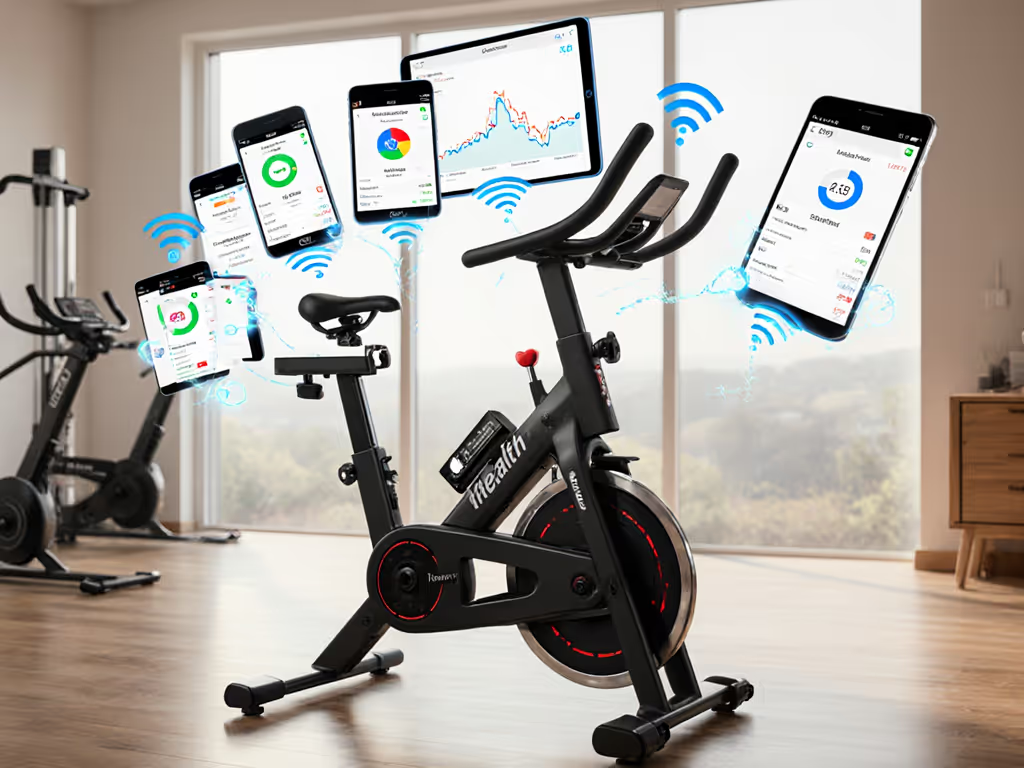
An app-agnostic bike speaks open standards: Bluetooth FTMS (Fitness Machine User Data Service) and ANT+ FE-C (Trainer Control). These protocols mean your bike plays nicely with Peloton App, Zwift, TrainerRoad, Apple Fitness+, Kinomap, and dozens of others without dongles, proprietary adapters, or feature lockout. Compare platforms in our open fitness API compatibility guide. You own your choice. You own your data.
Bikes tethered to a single app ecosystem trap you. Subscriptions rise. Interface updates break workflow. Firmware stalls. You're stuck.
Look for bikes with dual-radio support (Bluetooth and ANT+), offline core functions (resistance, cadence, at minimum), and a clear firmware update path. Ask the manufacturer: "Does this bike work with [app name] without extra hardware?" If the answer is vague, keep searching.
How accurate is the power and cadence data, and does it drift?
Accuracy matters because bad data breeds bad habits. A report on fitness equipment standards confirms that PT-approved stationary bikes should hold power accuracy to ±2% or better, with cadence drift negligible over months of use.
Monark bikes, for instance, employ pendulum-based calibration systems that maintain exact measurement accuracy over time. Wattbike invests in scientific validation and reliability, not speculation, building every unit on independent testing protocols.
Here's the trap: many bikes claim accuracy but offer no user-accessible calibration. Ask about:
- Calibration method: zero-offset or spindown, user-initiated or automatic?
- Drift history: real reviews mentioning power creep over six months?
- Replacement protocol: can you replace a worn cassette or recalibrate without sending it back?
Watt-measuring systems (power meters) and magnetic-resistance bikes will outperform air or fluid resistance in consistency. Expect to pay for this precision; it's worth it.
What does "range of motion tracking" really mean, and how does it help?
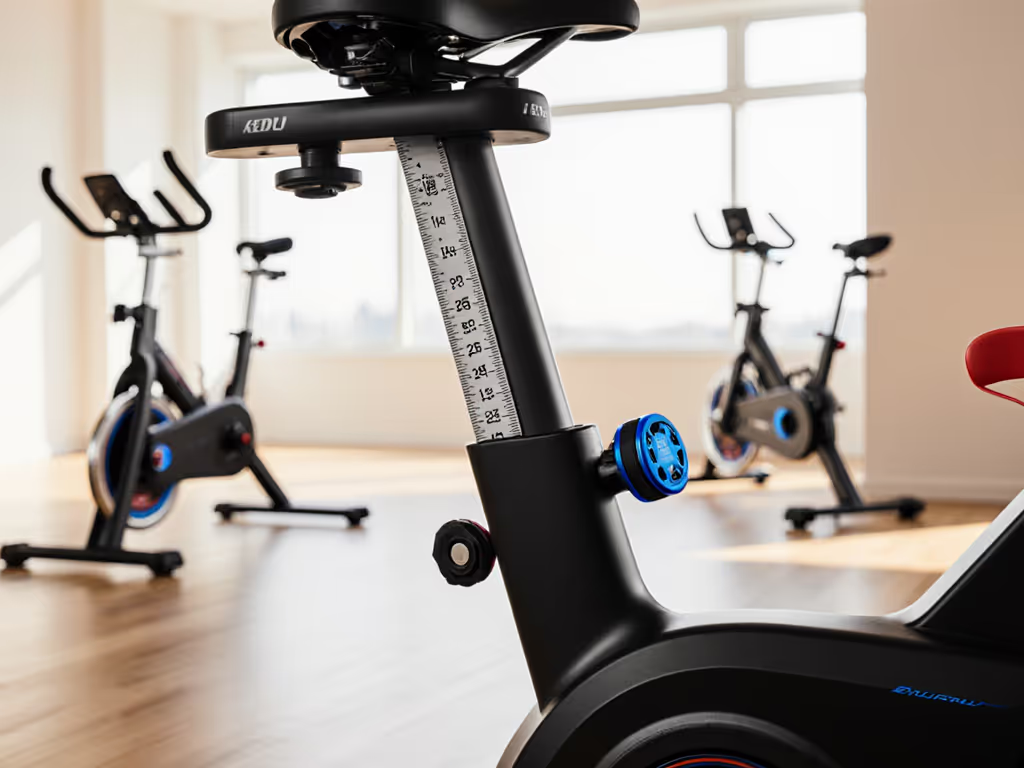
Range of motion tracking captures seat height, reach, and pedal alignment, then logs how those settings shift over time. It's especially useful in multi-user households or for rehabilitation progress metrics where you're monitoring symmetry and form drift.
A therapist-approved cycling equipment system will record:
- Seat height and setback each ride
- Handlebar reach
- Power balance (left vs. right leg)
- Cadence stability
- Heart rate zones (if integrated with a chest strap)
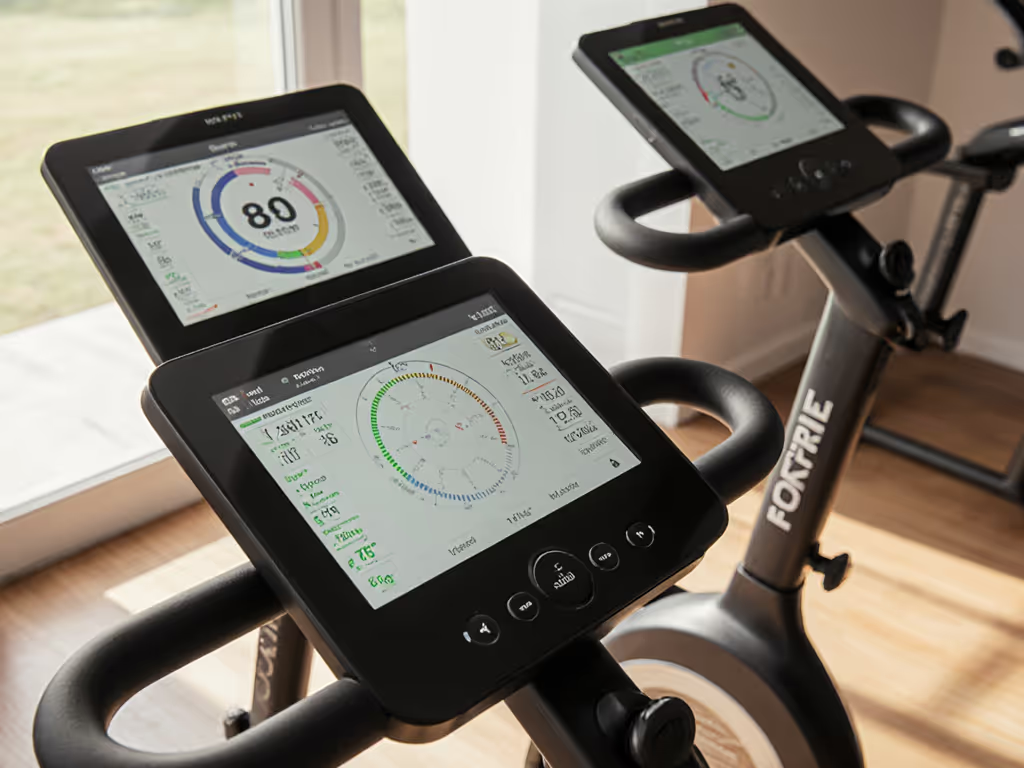
Therapists use this to spot imbalances and flag form breakdown. Over weeks, you'll see your power shift from 45/55 L/R to 48/52, real progress. For precise HR training, follow our heart rate calibration guide. Many smart apps (Zwift, TrainerRoad) log these via their APIs; others require manual export from the bike's companion app.
Check: does the bike record each session's setup, or just today's ride? Does the app let you export this data to a spreadsheet or health platform? Can you share sessions with a PT without cloud login?
How quiet do these bikes really get, and what's the cost?
Marketing says "whisper-quiet." Apartment reality says otherwise. Vibration through a floor transmits sound to neighbors below. Pedal creaks carry at 5 AM.
Quiet comes from two levers: magnetic resistance (no contact, low noise) and vibration isolation. If you're choosing between resistance systems, see our magnetic vs friction comparison for verified noise tests. Air resistance (Peloton, Echelon) is inherently noisier. Fluid resistance is smoother but heavier and more expensive.
Theracycle's smart-motor therapy bike, for example, runs whisper-quiet with adjustable speed control and motor assistance, valuable for users with Parkinson's or MS who need reduced load but consistent cadence.
To test: ask for decibel measurements in real apartments (not lab conditions). Look for reviews mentioning early-morning use without complaints. Budget 5 to 8% of bike cost for isolation: rubber pucks, foam matting, or a composite riser. A $1,500 bike + $100 in dampening often outperforms a $3,000 "quiet" bike on naked hardwood.
What warranty should I expect, and what does it actually cover?
Warranties vary widely. Budget bikes often skip coverage or limit it to one year on parts. Mid-range machines typically offer 3 years on the frame and 1 to 2 years on electronic components. Premium options (Sole LCR, for instance) include lifetime frame warranties. For brand-by-brand details, see our exercise bike warranty comparison.
Here's what matters: frame coverage is cosmetic insurance; the real question is electronics and wear parts. Look for:
- 3+ years on mechanical parts (bearings, bottom bracket, chain/belt)
- 2–3 years on electronics (display, circuit board, resistance motor)
- 1 year on consumables (seat, pedals, brake pads)
Brand examples:
- Schwinn: 10 years frame, 3 years mechanical, 3 years electric, 1 year parts.
- Sunny Health & Fitness: coverage against defects in materials and workmanship; specifics vary by model.
Ask your seller: "Is this warranty US-only?" "What is NOT covered?" "Does water damage void it?" Extended warranty plans (via SureBright, for example) can add protection for resistance issues, display problems, and mechanical failures, but read the terms carefully, as some are overpriced and exclude the parts that actually fail.
How do I ensure my data isn't trapped in one ecosystem?
Data freedom is non-negotiable. Here's your checklist:
- Export to Apple Health, Strava, Garmin: seamless integration or manual export in FIT/TCX format?
- Offline functionality: can you ride without internet? Do core metrics (power, cadence, distance) sync later?
- Account portability: if the company shuts down, can you download all your ride files?
- Third-party API support: does the bike log to your preferred tracking app, or only its own?
Many bikes sync only to their proprietary app, creating a walled garden. Zwift, TrainerRoad, and Peloton have open APIs and support multi-app sharing. Smaller brands often don't. Ask the manufacturer directly; if they hedge, move on.
Defaults beat willpower. Set your bike to auto-export to your health platform from day one.
Comparison: Smart Bike Types
Magnetic Upright Bikes
Quiet, compact, affordable ($1,000 to $3,000). Accuracy depends on the power meter; most offer ±3% or better. Good for small spaces and multi-user homes. Limited range of motion tracking unless paired with an external sensor. Ideal if you want simplicity and don't need recumbent comfort.
Recumbent and Semi-Recumbent Bikes
Greater comfort for longer sessions, natural spinal alignment, lower injury risk. More space-intensive. Theracycle's semi-recumbent therapy bike, for instance, uses motor assistance and closed-loop control to help users with neurological conditions maintain cadence and heart rate safely. Excellent for rehabilitation but pricier and bulkier than uprights.
Direct-Drive Smart Trainers (Bike + Trainer Setup)
Highest accuracy (±1 to 2%), quietest, most app compatibility. Requires a separate bicycle, adding cost and complexity. Best for cyclists who already own a road or gravel bike and want to bring it indoors. Setup is involved; not ideal for renters or those with limited space.
Building Your Low-Friction Setup
Consistency beats complexity. Here's a clear steps approach:
Step 1: Establish your non-negotiables. Quiet? App flexibility? Compact? Multi-user fit? Write them down.
Step 2: Test in person if possible. Bike shops sometimes offer short trials. Even 10 minutes reveals fit issues and noise. Online reviews from real apartments matter more than studio feedback.
Step 3: Verify connectivity. Bring your phone or tablet. Test Bluetooth linking to your favorite app. Ask about offline mode.
Step 4: Check the warranty and parts availability. Can you replace a saddle, pedals, or display? Are spares in stock, or 6-week lead times?
Step 5: Calculate total cost of ownership. Bike + mat + pedals + subscriptions (if any) + potential repairs. More expensive isn't always better; a $1,500 magnetic bike with low noise and standard parts often outperforms a $2,500 proprietary machine.
Step 6: Plan your defaults. Before it arrives, choose one or two go-to apps, a default time slot, and a resting spot. No decisions in the moment; defaults beat willpower.
The Long View
A smart bike that works with your home, not against it, becomes invisible. It doesn't wake the household, doesn't demand a subscription you'll resent, doesn't vanish when the company pivots. It records data you own, fits your body without micro-adjustments every session, and lasts through years of quiet, consistent use.
That momentum, the kind that compounds over weeks and months, thrives when setup friction disappears. Start small, stay quiet, and compound the wins. Your future self will thank you.
Further Exploration
Ready to narrow your search? Dig into real apartment reviews on forums like r/IndoorCycling and Slowtwitch. Check buyer feedback specifically mentioning noise at 6 AM, app compatibility surprises, and long-term reliability. Visit a local bike shop and ask to sit on three to five models; fit matters more than spec sheets. Finally, reach out to the manufacturer's customer support team with your specific questions, and their responsiveness tells you a lot about ownership experience ahead.
Your future morning rides are worth the upfront clarity now.
Related Articles