5-Minute REHIT Bike Protocol: Science-Backed Results
By Hyejin Park • 13th Dec
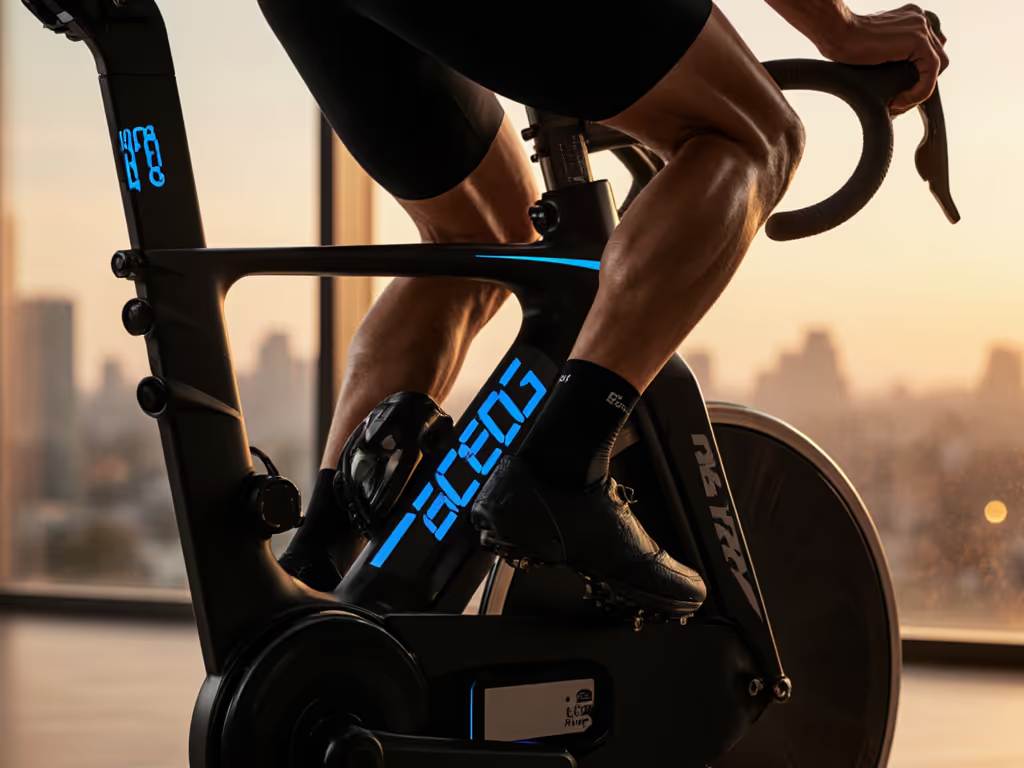
When time is your scarcest resource, REHIT exercise bike protocols offer a scientifically validated solution that transforms brief sessions into meaningful fitness gains. This reduced exertion cycling method delivers substantial physiological benefits in as little as five minutes, making it ideal for apartment dwellers, busy parents, and professionals juggling competing priorities. Unlike traditional cardio, REHIT prioritizes efficiency without sacrificing efficacy, with research confirming its ability to boost metabolic rate and cardiovascular fitness through strategic intensity spikes.
What Exactly Is REHIT and How Does It Work?
Reduced Exertion High-Intensity Interval Training (REHIT) condenses the physiological benefits of traditional HIIT into drastically shorter sessions. The core structure involves:
- 3-minute warm-up at low resistance (20-30% max effort)
- Single 20-second all-out sprint
- 3-minute active recovery
- Second 20-second sprint
- 3-minute cooldown
This 9-minute framework (often completed in under 5 minutes of active exertion) triggers disproportionate metabolic responses. During each 20-second sprint cycling burst, you deplete intramuscular ATP by up to 50%, creating a substantial oxygen debt that continues burning calories long after dismounting. The "reduced exertion" label reflects both the brevity of maximal effort and the longer recovery periods that make these sessions sustainable for real-world users.
What Does the Science Say About REHIT's Effectiveness?
Recent studies provide compelling evidence for scientifically proven REHIT protocols:
- An ACE-sponsored study found REHIT sessions on precision-calibrated bikes produced greater improvements in VO₂max (10% average increase) than 45-minute steady-state cardio in eight weeks
- Participants saw significant reductions in blood pressure and waist circumference (key markers of cardiometabolic health)
- Research published in the Frontiers in Sports and Active Living journal confirmed REHIT elicits EPOC (excess post-exercise oxygen consumption) levels 30% higher than moderate-intensity continuous training
- A Western Colorado University study demonstrated that workout protocols requiring 90% less time yielded 12% VO₂max improvements over eight weeks
The magic lies in the metabolic disruption: those two 20-second sprints create such profound energy system demand that your body continues recalibrating for 24 to 48 hours post-ride. This "afterburn effect" means you're still benefiting while making breakfast or answering emails. For a broader look at cycling's health impacts, see our exercise bike health benefits.
How Can I Implement a 5-Minute REHIT Protocol at Home?
Follow this evidence-based checklist for optimal results:
Equipment Setup
- Resistance calibration: Aim for 7.5% of body weight resistance during sprints (e.g., 12.75 lbs for 170 lb rider)
- Cadence target: Build to 120+ RPM during warm-up before sprint resistance engages
- Heart rate monitoring: Confirm you reach 85-95% max HR during sprints; stop if exceeding 95% If your readings seem inconsistent, follow our heart rate calibration checklist.
Execution Protocol
"Start conservatively; your first sprint should feel challenging but sustainable. Perfect form trumps maximum speed."
- Warm-up: 3 minutes at 60-70 RPM, 20% max effort
- Pre-sprint: 15-second build to 100+ RPM against no resistance
- Sprint: 20 seconds at maximum sustainable effort (resistance engages automatically on smart bikes)
- Recovery: 3 minutes at 60 RPM, 30% effort
- Repeat: Second sprint followed by cooldown
Note: True REHIT requires near-maximal effort during sprints; this isn't moderate interval training. The brevity makes true intensity manageable for most fitness levels.
What Biomechanical Considerations Matter for Multi-User Households?
This is where most consumers hit unexpected friction. In my shop fitting days, I watched households abandon perfectly good bikes because they couldn't accommodate multiple users comfortably. Fit range matters more than headline watt numbers (especially when someone 4'11" shares equipment with a 6'3" partner). If multiple ages will share one bike, our family smart bike guide highlights quick-adjust models and child-safe profiles.
Key adjustability checkpoints:
- Seat height range: Minimum 25" to maximum 40" from crank center (covers 95% of adult riders)
- Handlebar reach: Minimum 30" to maximum 42" horizontal adjustment
- Micro-adjustments: Sub-centimeter saddle fore/aft tuning prevents knee strain
- Pedal stack height: Under 20mm for proper ankle alignment during sprints
Comfort and adjustability are performance multipliers at home. I've timed families swapping settings on bikes with proper range, and they complete transitions faster than changing a TV channel. When fit adjustments become routine rather than a chore, adherence naturally follows.
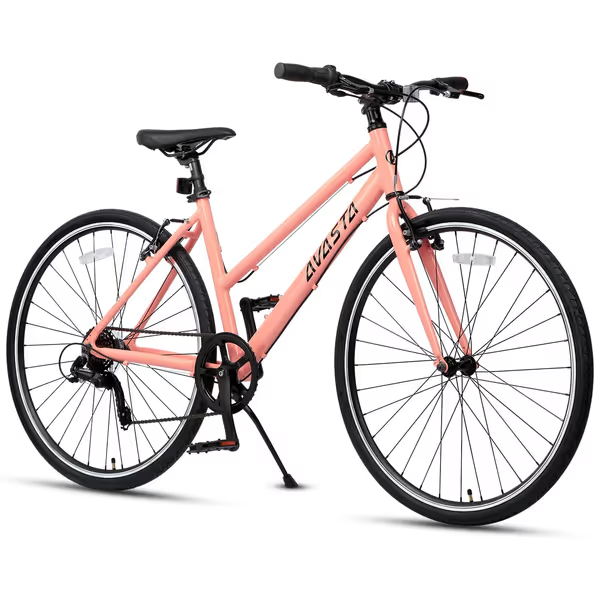
AVASTA Populus 700C Road Bike for Women
Lightweight, versatile women's road bike for comfortable, everyday riding.
$219.99
Frame Material6061 Aluminum (supports up to 300 lbs)
Frame Material6061 Aluminum (supports up to 300 lbs)
Pros
Lightweight aluminum frame for easy handling and durability.
7-speed gears and reliable brakes for varied terrain.
Step-through design and comfortable seat for easy, pleasant rides.
Cons
Geared more for road than off-road use.
Customers find the bicycle to be of high quality and easy to assemble. They praise its ride quality, with one customer noting it handles well during travels. Customers also consider it a great value for money.
Customers find the bicycle to be of high quality and easy to assemble. They praise its ride quality, with one customer noting it handles well during travels. Customers also consider it a great value for money.
How Do I Ensure Proper Form During REHIT Sprints?
Sprinting induces unique biomechanical stresses. Protect your joints with these subtle but critical tweaks: For a step-by-step walkthrough, see our proper exercise bike posture guide.
Knee Tracking
- Maintain 35 to 45 degree knee bend at bottom of stroke
- Prevent lateral knee wobble by aligning kneecap with 2nd/3rd toe
- Adjust saddle height if you feel "pinching" at top of stroke
Hip Stability
- Engage core to prevent excessive rocking during sprints
- Check that pelvic bones remain level; no hip hiking on dominant side
- Drop shoulders 1 inch below resting position to reduce upper body tension
Foot Position
- Ball of foot centered over pedal axle (use visible bump as guide)
- Maintain 90% of pressure through ball of foot during sprints
- Neutral ankle angle (avoid toe pointing down)
Perform these checks pre-ride using the "30-Second Form Scan":
- Mount bike without clipless pedals
- Set crank at 6 o'clock position
- Verify knee forms a 35 to 45° angle
- Check foot position alignment
- Confirm handlebars allow slight elbow bend
What Equipment Considerations Matter Most for Home Use?
For apartment dwellers and multi-user households, these features make or break sustainability:
- Noise profile: Verified <65 dB at sprint intensity (quieter than normal conversation)
- Vibration damping: Solid floor contact points that don't transmit to downstairs neighbors
- Standard components: 9/16" pedal threads and standard seatpost diameters for easy swaps
- Drift prevention: Weekly calibration requiring <60 seconds
- Open connectivity: Bluetooth FTMS compatibility for third-party apps
Some modern bikes integrate AI to personalize resistance based on fatigue, like the CAROL bike protocol that adjusts resistance as you improve. But even basic mechanical bikes work well if you manually apply the 7.5% body weight resistance formula during sprints.
Your Actionable Next Step
Complete a single 5-minute REHIT session this week using this modified protocol for beginners:
- Warm-up: 3 minutes at conversational pace
- Build: 15 seconds to high cadence
- Sprint: 15 seconds (80% max effort)
- Recovery: 3 minutes
- Repeat sprint and recovery
- Cool down: 2 minutes
Track your perceived exertion (Borg Scale) and note how you feel 2 hours post-ride. To build consistency after this trial, follow our 30-day exercise bike plan. This micro-experiment reveals whether REHIT's metabolic boost aligns with your body's response. Remember: Fit first, everything else follows. A properly adjusted bike turns these brief sessions into consistent habits, not occasional heroics.
Related Articles