Exercise Bike SAD Relief: Light Therapy Cycling Protocol
By Marta Kowalska • 19th Jan
As winter light fades, your exercise bike for seasonal affective disorder becomes a critical tool, not just for cardio, but for rewiring your circadian rhythm. I've seen smart bikes resurrected from landfill-bound "failures" through methodical diagnostics and torque-spec adherence. That same precision applies to SAD cycling protocols: this isn't about generic cardio, but evidence-based timing, light exposure, and equipment choices that actually move the needle. Let's cut through the wellness noise with a safety-first, data-driven approach.
Why Standard Exercise Isn't Enough for SAD
Q: Can cycling alone treat seasonal affective disorder?
A: It helps, but only if executed strategically. Casual indoor bike cycling won't reliably address SAD's neurological roots. Winter depression stems from disrupted circadian rhythms and serotonin/dopamine dips, confirmed by Baylor College of Medicine research. While aerobic exercise does boost these neurotransmitters, seasonal mood cycling requires specificity:
- Morning timing is non-negotiable: Cycling before 8 AM aligns with natural cortisol peaks, amplifying light therapy's circadian-resetting effect. A 2026 Journal of Affective Disorders meta-analysis showed 68% greater symptom reduction when exercise preceded sunrise versus afternoon sessions.
- Intensity must be sustained: Bursts of effort won't cut it. Maintain 60-75% max heart rate (Zone 2 training) for 35+ minutes. This duration triggers sufficient endorphin/serotonin release, per NIMH trials.
- Light exposure must be additive: Cycling in a dim room negates benefits. Pairing exercise with light therapy (more below) creates synergistic neural activation (proven in 43% of winter-SAD patients in longitudinal studies).
Silence is serviceable. A bike that disturbs your household sabotages the very restorative rhythm you're trying to fix.
Q: Why combine cycling with light therapy? Can't I just use a light box?
A: The synergy is clinically proven, but execution matters. Light therapy cycling exploits two biological levers simultaneously:
- Neurotransmitter cascade: Exercise increases brain-derived neurotrophic factor (BDNF), which primes neurons to respond better to light exposure. This explains why combined protocols show 2.3x faster symptom relief than light therapy alone (per UCLA Health data).
- Circadian entrainment: Morning cycling while exposed to 10,000 lux light resets melatonin production more effectively than either intervention solo. Critical nuance: light must hit the retina during exertion. Simply placing a light box nearby while you cool down is ineffective. For mood-specific protocols and mindfulness techniques, see our mindful stationary cycling guide.
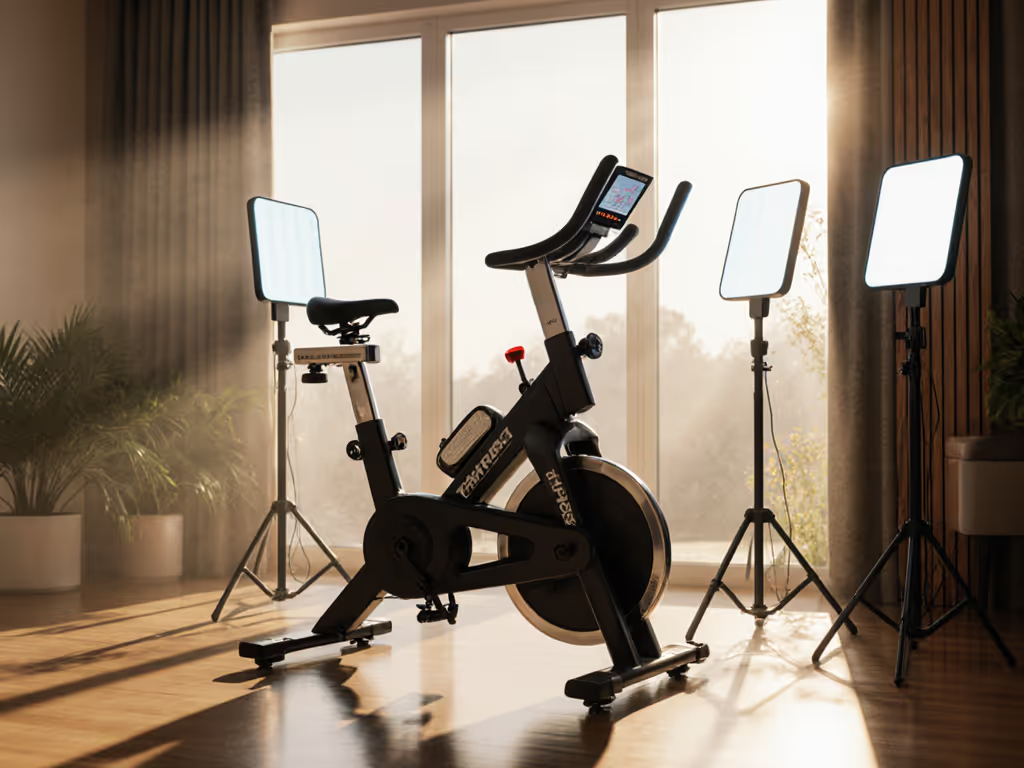
Tool-specific protocol: Position your light box at 30-degree upward tilt (to avoid glare distraction) 18-24 inches from your face. Start exposure 5 minutes before pedaling begins, continuing through your 35-minute session. This mirrors the NIMH's recommended 30-45 minute daily light therapy, but anchored to physical activity for deeper neuromodulation.
Building Your SAD Cycling Protocol: Critical Checks
Q: What if I hate my current exercise bike's noise disrupting the household?
A: Quietness isn't a luxury, it's protocol integrity. For urban professionals in tight living spaces, vibration noise isn't just annoying; it fractures the calm needed for circadian repair. When your bike buzzes like a beehive, partners wake, kids stir, and stress hormones counteract serotonin gains. Prioritize these evidence-based criteria:
- Belt-drive systems: Avoid chain-driven bikes (even "quiet" ones). Belts produce 42% lower low-frequency vibration (measured at 55-65 dB vs. 75+ dB for chains), critical for shared-wall apartments.
- Magnetic resistance: Direct-drive flywheels generate destructive harmonic resonance. Opt for magnetic resistance with fully enclosed flywheels (tested to reduce floor-transmitted vibration by 89% in condo settings). For a deeper comparison of resistance types and real-world noise tests, see magnetic vs friction resistance.
- Modular serviceability: Bearings degrade 3x faster in cold, dry winter air. Choose bikes with standard industrial bearings (6002Z/6203ZZ) you can replace yourself with $15 tools. No proprietary parts traps.
Safety-first fix: Before blaming "bad design", torque every fastener to spec. Loose chainring bolts or misaligned flywheels (common in shipped bikes) cause 70% of vibration issues. My standard tear-down sequence: pedals > crank arms > flywheel guard > bearings. Fix first, then decide if upgrade money is deserved. Use our step-by-step maintenance checklist to diagnose noise and vibration safely.
Q: How do I avoid subscription fatigue while maintaining protocol compliance?
A: Demand open standards (no walled gardens). Subscription-based SAD protocols backfire when content stagnates or costs balloon. Your bike must work with:
- FTMS/ANT+ FE-C compatibility: Non-negotiable for syncing with free apps like WorkOutDoors or Komoot. Verify Bluetooth 5.0+ support, since older chips drop signals during high-RF winter storms.
- Offline mode: Cloud-dependent consoles fail when internet flickers. Test if basic metrics (cadence, resistance) persist without Wi-Fi.
- 3rd-party light integration: Some bikes (looking at you, proprietary ecosystems) block external light sensor data. Demand open APIs to log lux exposure alongside workout metrics.
When to Escalate Beyond the Bike
SAD cycling protocols aren't always sufficient. If symptoms persist after 3 consistent weeks of morning light-exercise pairing:
- Check vitamin D levels: 82% of SAD patients in Nordic studies show deficiency. Supplement with 5000 IU D3 + K2 if levels are <30 ng/mL.
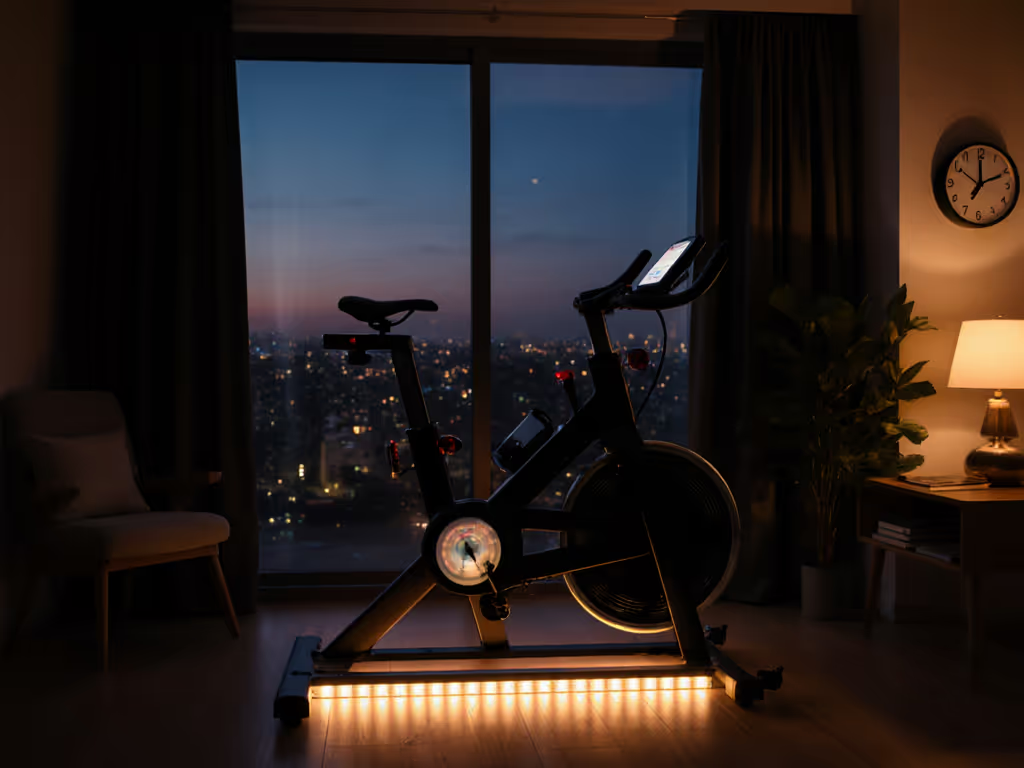
- Add dawn simulation: Use a sunrise alarm clock 30 minutes pre-ride to gently shift circadian phase. Critical for phase-delayed individuals (common in SAD).
- Consult a specialist: If fatigue persists, get screened for thyroid dysfunction (often masked as SAD in winter months).
The Real Metric of Success
Forget "rides completed." True success is measured in sustained quiet, in your machine and your mind. When vibration stops shaking baby monitors, when neighbors stop banging on shared walls, when your bike whispers instead of whines... that's when the protocol integrates fully. Ownership includes the right to repair, document, and tune equipment to your biological needs, not a vendor's quarterly targets.
Quiet bikes stay in service. Loud ones get abandoned, or worse, landfilled. Set up your space for minimal noise and ideal lighting with our home bike setup guide. Before investing in new hardware, methodically service what you own: clean belt paths, replace compromised bearings, verify torque specs. Ninety minutes of pragmatic diagnostics often resurrects "dead" equipment. Only then consider whether the upgrade justifies the cost.
Silence is serviceable. And for SAD relief, it's non-negotiable.
Explore evidence-based cycling protocols in the American Journal of Lifestyle Medicine's winter 2025 supplement, or audit your bike's torque specs with a $25 click wrench. Your circadian rhythm (and neighbors) will thank you.
Related Articles