Exercise Bikes for Sleep: Optimal Timing and Circadian Rhythm
By Marta Kowalska • 15th Mar
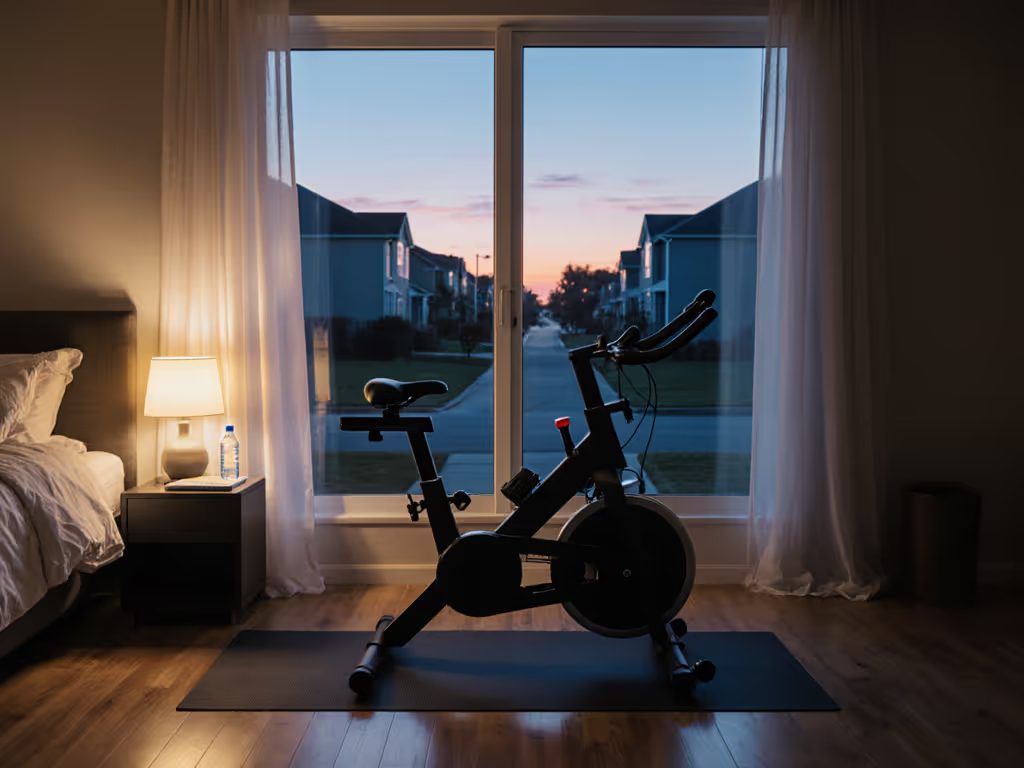
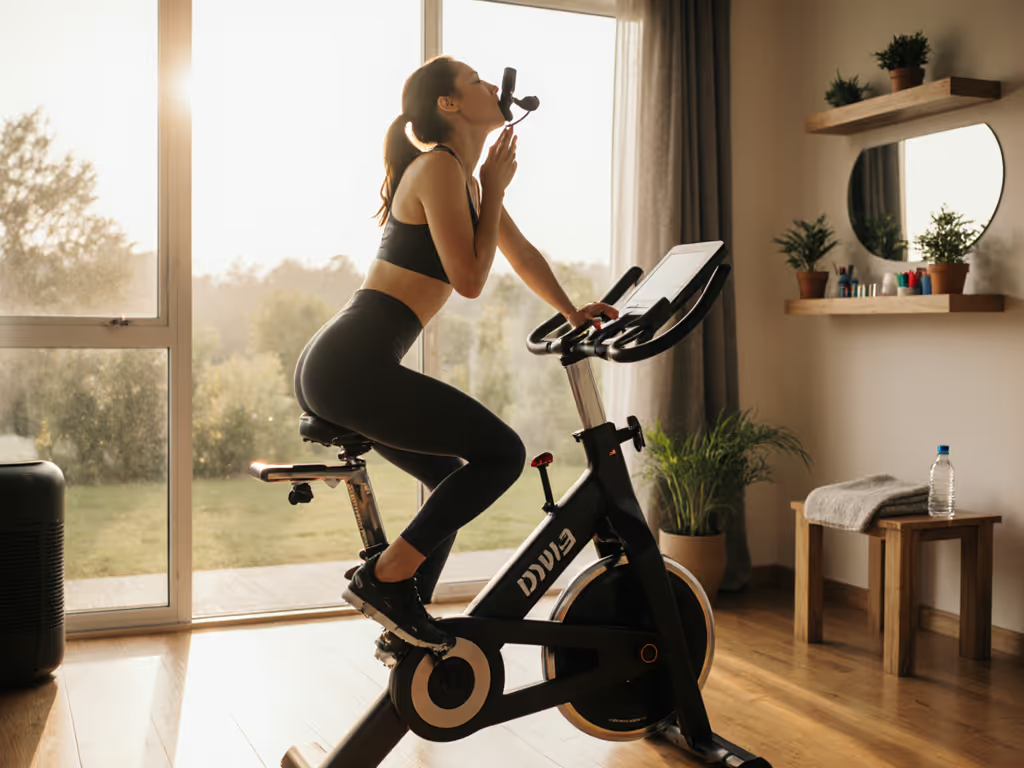
When your partner stirs at midnight from another thundering session at the gym (or worse, when your own post-work cardio leaves you wired at 2 AM) the question shifts from "Does cycling improve sleep?" to "When, and how?" Emerging research confirms that cycling on an exercise bike can measurably improve sleep quality, but context is everything. Timing relative to your circadian rhythm, workout intensity, and consistency all determine whether that stationary bike becomes a sleep supercharger or a keep-you-up mistake.
FAQ: Timing, Rhythm, and the Sleep-Exercise Connection
How does exercise timing affect my circadian rhythm?
Your body operates on a roughly 24-hour cycle (your circadian rhythm) that regulates sleep-wake hormones like melatonin and cortisol. Exercise influences that clock through several mechanisms.[1][2] If you work nights or rotate shifts, see our circadian-friendly workout timing guide for shift workers for protocols that align training with atypical sleep windows.
Physical activity raises your core body temperature; that subsequent cooling-down period signals your brain that sleep time is approaching.[2] Additionally, cycling and aerobic work increase endorphin production, lower stress, and reduce cortisol, all of which promote relaxation.[2] The timing of that temperature rise and hormonal shift relative to your bedtime determines whether you sleep soundly or remain alert.
Research from Clemson University found that students who cycled while studying (in short, frequent bouts) experienced more stable and consistent sleep quality across an entire semester compared to desk-only peers, without any decline in academic performance.[1] That stability came from gentle, low-intensity activity integrated throughout the day, signaling steady circadian alignment rather than a single high-intensity spike.
What's the ideal evening workout timing for better sleep?
This is where data and anecdote often diverge from marketing claims.
Studies show that moderate-intensity aerobic exercise, such as cycling 4-5 times per week for 40-60 minutes, produces meaningful improvements in sleep quality.[3][4] The pooled evidence across multiple trials indicates a statistically significant reduction in sleep disturbance measures when exercise is performed regularly.[3][4]
However, timing within the day matters. Intensive exercise performed too close to bedtime (typically within 2-3 hours) can elevate heart rate, body temperature, and adrenaline, counteracting sleep onset. The metabolic and hormonal state after hard cycling may keep you alert exactly when you need to wind down.
For most adults, moderate cycling done 3-6 hours before bed aligns well with circadian biology: the temperature drop and hormonal shift coincide with sleep preparation, rather than fighting it. Light to moderate intensity cycling closer to evening (1-3 hours pre-bedtime) is safer for sleep; hard efforts belong earlier in the day.
A methodical approach: log your workouts alongside sleep quality notes for two weeks. You'll likely identify a personal sweet spot where evening exercise on your bike enhances sleep rather than disrupts it.
How does cycling intensity affect sleep outcomes?
Not all cycling sessions carry equal weight.
Meta-analyses comparing exercise types found that moderate-intensity aerobic exercise was especially effective (mean difference -1.85 points on sleep quality scales), while low-intensity exercise such as yoga yielded no significant improvements.[3] This suggests there's a threshold: you need enough intensity to trigger the physiological mechanisms (temperature rise, endorphin release, metabolic adaptation) but not so much that you remain physiologically aroused hours later.
When cycling on an exercise bike, "moderate intensity" typically translates to 50-70% of your maximum heart rate, or a pace where you can talk but not sing. To keep those readings trustworthy, follow our exercise bike heart rate calibration guide. You should feel like you're working, not recovering.
The research also hints that consistency trumps extreme efforts: regular, predictable moderate sessions outperformed sporadic hard efforts or sedentary stretches punctuated by marathons.[3][4] Fix first, then decide if upgrade money is deserved (and in the context of sleep, that means: establish a sustainable, quiet routine before investing in higher-end equipment or exotic intervals). A methodical, repeatable protocol on a basic exercise bike will serve your sleep better than erratic, intensity-focused training on premium hardware.
What does the research say about cycling and insomnia specifically?
Insomnia relief cycling has shown promise in controlled trials. A 2025 meta-analysis of 81 randomized trials involving 6,193 participants concluded that exercise significantly reduced insomnia symptom scores and improved sleep efficiency (the proportion of time in bed actually spent asleep).[4]
When aerobic exercise and mind-body exercise were compared, aerobic activities (including cycling) ranked as the most effective for improving objective sleep efficiency measures.[3][4] The pooled mean improvement in sleep quality scores was -1.77 points (95% CI: -2.28 to -1.25), a statistically significant and clinically meaningful effect.[4]
Crucially, these gains emerged even in populations with existing sleep complaints; the intervention was not limited to people with perfect baseline sleep. For adults struggling with insomnia, adding regular moderate-intensity cycling is an evidence-supported, non-pharmacological intervention comparable to or better than many first-line treatments.
Yet the evidence also shows variability: some participants benefited more than others, likely depending on adherence, intensity, timing, and individual physiology. The most successful responders tended to maintain consistent routines (riding the same bike, at similar times, with similar intensity) week after week.
Why does consistency matter more than intensity for sleep optimization?
Your circadian system thrives on predictability. A consistent evening cycle (same time, same intensity, same bike) trains your body to expect the physiological cascade: exercise-induced temperature rise, post-exercise cooling, hormone shifts, and then sleep.
This is where exercise bike ownership shines: unlike gym memberships (vendor lock-in, scheduling friction, travel time), a home bike eliminates friction. You ride the same equipment in the same location at the same time. That consistency is your competitive advantage for sleep cycle optimization.
It also means your bike must be serviceable and quiet. A squeaking bearing, a drifting power meter, or a bike that wakes your household will break your routine faster than any app update. Silence is serviceable, and in the sleep context, serviceability enables adherence, adherence enables circadian alignment, and alignment enables sleep gains. A methodical exercise bike maintenance schedule (belt tension checks, bearing inspection every 6 months, sweat corrosion prevention) keeps your bike whisper-quiet and reliable enough to become part of your nightly ritual.
How frequently should I cycle to see sleep improvements?
The research points to a minimum threshold: studies showing sleep benefits typically involved cycling 3-5 times per week, 40-60 minutes per session, sustained for 8-16 weeks.[3][4] Sporadic efforts (one ride per week or scattered bouts) showed minimal sleep benefit.
For most adults, a realistic protocol would be 3-4 moderate-intensity cycling sessions per week, beginning 3-6 hours before target bedtime. This frequency is high enough to trigger adaptation (core body temperature rhythm shifts, parasympathetic tone recovery, endorphin sensitization) without requiring elite-level commitment.
A tool-specific note: if you're tracking power and cadence data on your bike, consistency makes calibration drift visible. Drifting power readings corrupt your intensity prescription, which undermines the physiological stimulus. Inspect your bike's sensors, recalibrate according to the manual every 4-8 weeks, and replace batteries proactively. Reliability of your equipment directly sustains consistency of your practice.
What features should an exercise bike have to support sleep-friendly training?
Not all bikes are created equal for a sleep-optimization routine.
-
Quiet operation is non-negotiable if you're riding early morning or evening in a shared home. For a deeper dive on sound and resistance types, see our magnetic vs friction resistance comparison. Magnetic resistance and belt drive systems generally run quieter than friction wheels; flywheel mass and bearing quality determine vibration isolation. A noisy bike guarantees you'll skip sessions to avoid waking others (consistency lost, sleep gains forfeited).
-
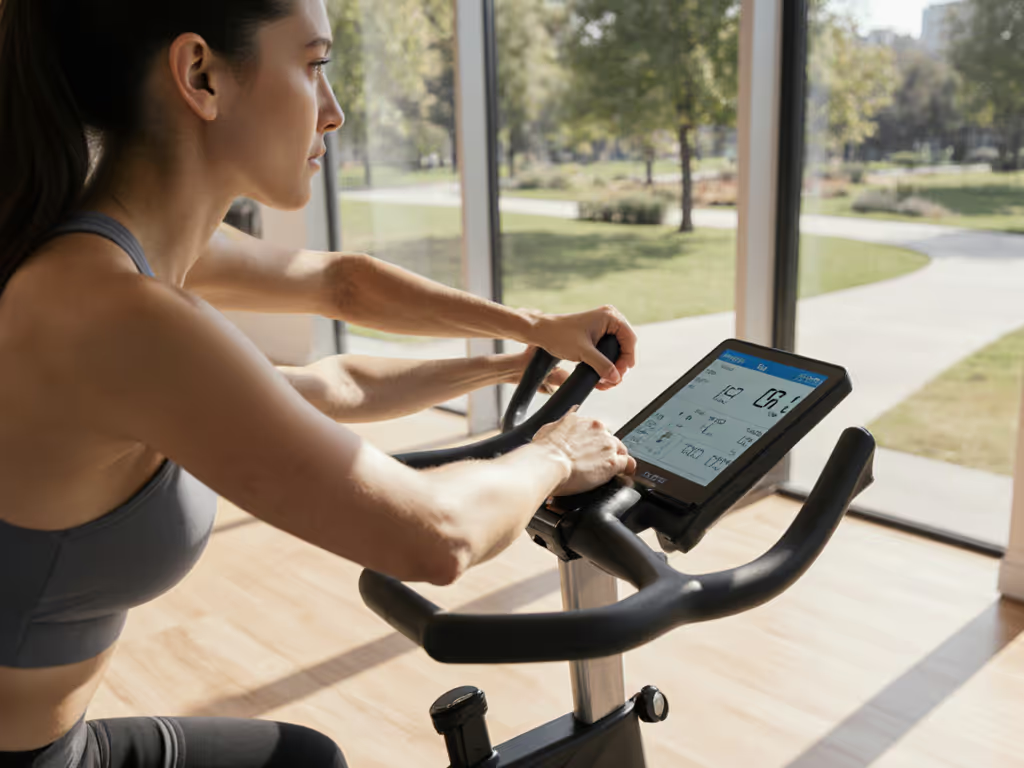
Accurate power and cadence metrics ensure your intensity stays in the moderate zone (50-70% max heart rate) without guesswork. Drift-prone sensors or uncalibrated power readings cause training-intensity misalignment; you think you're at 65% max HR when you're actually at 80%, and your evening ride becomes a sleep disruptor instead of a sleep enabler.
-
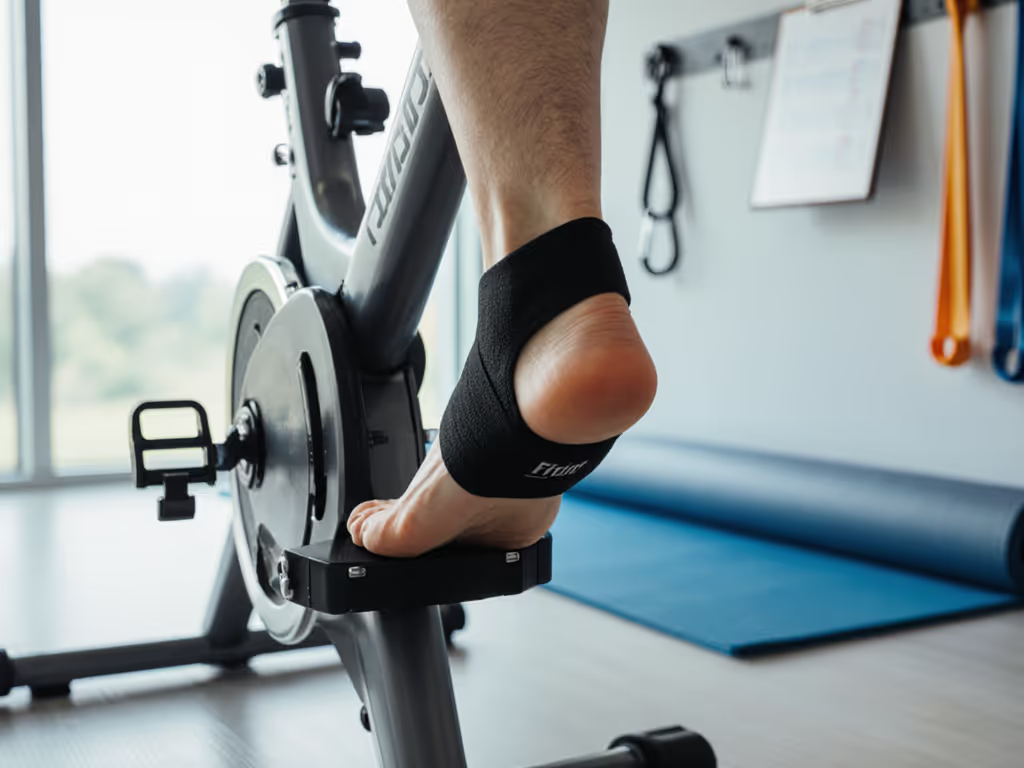
Standard pedals and saddle rails (not proprietary hardware) allow you to fit the bike to your body with precision, reducing discomfort and the temptation to skip rides. Multi-user households benefit from quick micro-adjustments (seat height, setback, handlebar reach) that take 60 seconds rather than 15 minutes. Safety-first design means a stable base that won't tip or flex, especially if you're riding in semi-darkness or fatigue.
-
Interoperability with major sleep and fitness apps (Apple Health, Strava, Garmin) lets you correlate your cycling data with sleep logs, uncovering personal patterns. A bike locked into a single proprietary ecosystem adds friction and often means data export is cumbersome or impossible. To avoid lock-in, compare bikes by their fitness API and data interoperability support.
In short: own a bike you can maintain, calibrate, adjust, and repair. Vendor lock-in and mysterious electronics erode the consistency that makes cycling an effective sleep intervention.
Silence is Serviceable: Building Your Sleep-Cycling Routine
The evidence is clear: regular, moderate-intensity cycling (performed at evening workout timing aligned with your circadian rhythm cycling preference) meaningfully improves sleep quality and reduces insomnia.[3][4]
Yet evidence alone doesn't guarantee results. Adherence does. And adherence depends on a bike that fits your body, runs quietly in your home, measures accurately, and requires minimal fuss to maintain week after week.
Start with 3 rides per week, 40-50 minutes each, timed 3-6 hours before your target bedtime. Track your sleep quality alongside your workout data for 8-12 weeks. Adjust timing or intensity only after you've built a consistent baseline; rushing to optimize is a common path to abandoning the routine.
As your practice stabilizes, invest in learning your bike's service schedule (belt tension, bearing condition, calibration drift). A 10-minute monthly inspection prevents the squeaks, rattles, and power-meter creep that erode confidence and consistency.
Further Exploration
What's your current evening routine, and where might a 40-50 minute cycling session fit without disrupting sleep or household harmony? Do you track sleep data already, or would integrating sleep logs with your cycling workouts help identify your personal sleep-cycling sweet spot? Explore these questions alongside your bike manufacturer's maintenance guidance; you may discover that the intersection of consistent, quiet training and meticulous equipment care is where sleep gains actually live.
Related Articles