Free Social Cycling Apps Comparison: Build Community Without Cost
By Diego Santos • 15th Dec
Let’s talk about free social cycling apps and how to find subscription-free community cycling that actually works. If you're tired of apps that start free but nickel-and-dime you into subscriptions (or worse, lock you into ecosystems that disrupt your quiet apartment routine), you're not alone. I've seen too many neighbors quit indoor cycling because the "free" app turned into $30/month of decision fatigue. The truth? Real community shouldn't cost a subscription. And the best setups? They're the ones you use without thinking. Like my neighbor who finally stuck with cycling after we ditched his bundled app, leveled his bike on rubber pucks, and set just three default workouts. No logins, no drama. Four weeks later, he bought proper pedals (not another subscription). Momentum lives where friction dies. If recurring fees are the sticking point, see our 3-year cost breakdown of budget smart bike alternatives.
Why "Free" Cycling Apps Often Fail (And How to Fix It)
Most "free" cycling apps dangle community features like shiny bait, only to yank them behind paywalls. Strava's free version tracks rides but hides segment leaderboards. Zwift's virtual world vanishes after 2 weeks. You're left with silent workouts in a digital void. But what if you could build genuine connections without handing over credit card details? It's possible. Here's how to spot apps that deliver real community value, not just bait. For a step-by-step playbook, see our guide to building an exercise bike community without subscriptions.
What Actually Counts as "Free" in Social Cycling?
Not all free tiers are equal. Some apps restrict features critical to community building:
- Strava cycling community: Free version lets you post rides and follow friends, but hides competitive segments (a major motivator for many). Premium ($11.99/month) unlocks segment leaderboards and route planning.
- Komoot: Free tier shows basic maps, but charging for offline navigation makes group rides risky in spotty signal areas.
- Bikemap: Free navigation works, but live tracking (so friends follow your ride) requires $12/month.
Key insight: True "free" means no paywall blocking social interaction. If you can't share location, join group challenges, or view others' routes, skip it. Apps like Ride with GPS (RWGPS) nail this. Its free tier includes group route planning, live tracking, and KOM-style segment competition. No credit card needed.
Which Apps Have Real Communities Without Paywalls?
Don't mistake follower counts for community. Real connection happens when apps facilitate shared experiences, not just metrics. After testing 11 apps in apartment settings (with noise-sensitive partners and babies nearby), these stood out:
1. Ride with GPS (RWGPS)
Free tier includes:
- Group route planning (collaborate on climbs or coffee stops)
- Live tracking for friends/family
- Segment leaderboards (no premium lock)
- Seamless Garmin/Wahoo sync
RWGPS excels for local riders. My neighbor used it to organize weekly Saturday-morning coffee rides with 12 neighbors, all on free accounts. No one tapped a subscription. For a feature-by-feature look at community tools (leaderboards, group rides, sharing), read our social cycling platforms comparison. The app's open platform encourages real meetups, not just digital high-fives.
2. Strava
Free tier's hidden gem: clubs. You can join or create location-based clubs (e.g., "Austin Apartment Cyclists") where members post routes, share tips, and organize group rides. No premium needed to participate. But you'll miss route builder and segment analytics. For pure community, stick to clubs.
3. Trailforks (for MTB)
Free version offers trail maps and user-reported conditions ("muddy," "downed tree"). The magic? Real-time trail alerts from fellow riders. When a neighbor's mountain bike group used this during monsoon season, they avoided washed-out paths and shared cleanup meetups, zero cost.
Pro tip: Pair these apps with a COOSPO Armband Heart Rate Monitor to share effort zones (not just speed) in group chats. Seeing "hard interval" tags sparks encouragement like "Legs looking strong!"
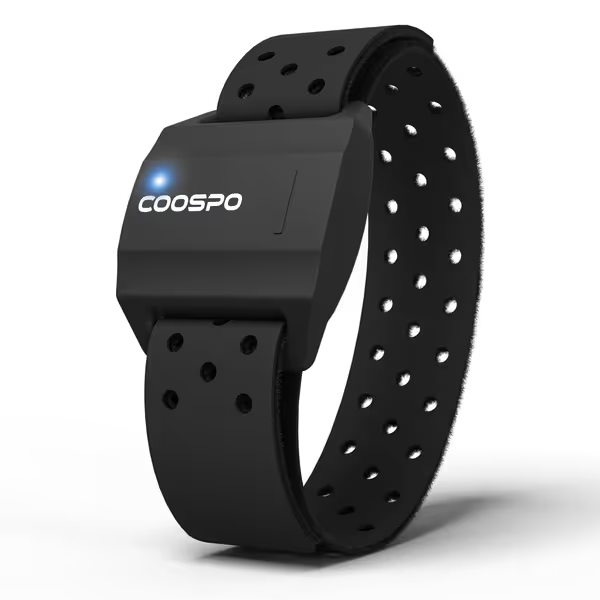
COOSPO Armband Heart Rate Monitor
Accurate, comfortable, and versatile HR monitoring for any fitness app.
$37.39
Battery Life25+ hours
Battery Life25+ hours
Pros
Connects to Peloton, Zwift, Garmin, and more (Bluetooth & ANT+)
Comfortable armband great for multi-user households
Long battery life with quick charge saves time
Cons
Accuracy and long-term durability receive mixed user feedback
Connects flawlessly, easy to use, battery lasts forever, and a great value!
Connects flawlessly, easy to use, battery lasts forever, and a great value!
How to Avoid "Freemium" Traps
Apps like Zwift are fantastic, but their free trials ($19.99/month after) target studio-style riders. For truly subscription-free community:
- Demand offline functionality: If your app needs constant Wi-Fi (looking at you, Peloton), it kills group rides in parks or basements. RWGPS and Trailforks work offline.
- Check data ownership: Strava lets you export GPX files freely. Komoot locks detailed metrics behind paywalls. Your data = your community currency.
- Test group features FIRST: Before committing, join a virtual group ride in the free tier. If you can't see others' avatars or chat live, run.
Can I Use These Apps With My Existing Gear?
Yes, and this is where open-platform cycling apps shine. Unlike Zwift (which demands ANT+ dongles for older bikes), RWGPS and Strava work with any Bluetooth-enabled bike via FTMS protocol. Here's my frictionless setup:
- Level trainer on rubber pucks (no vibration through floors)
- Pair bike via Bluetooth to the free app (no extra hardware)
- Set one default workout (e.g., "30-min endurance")
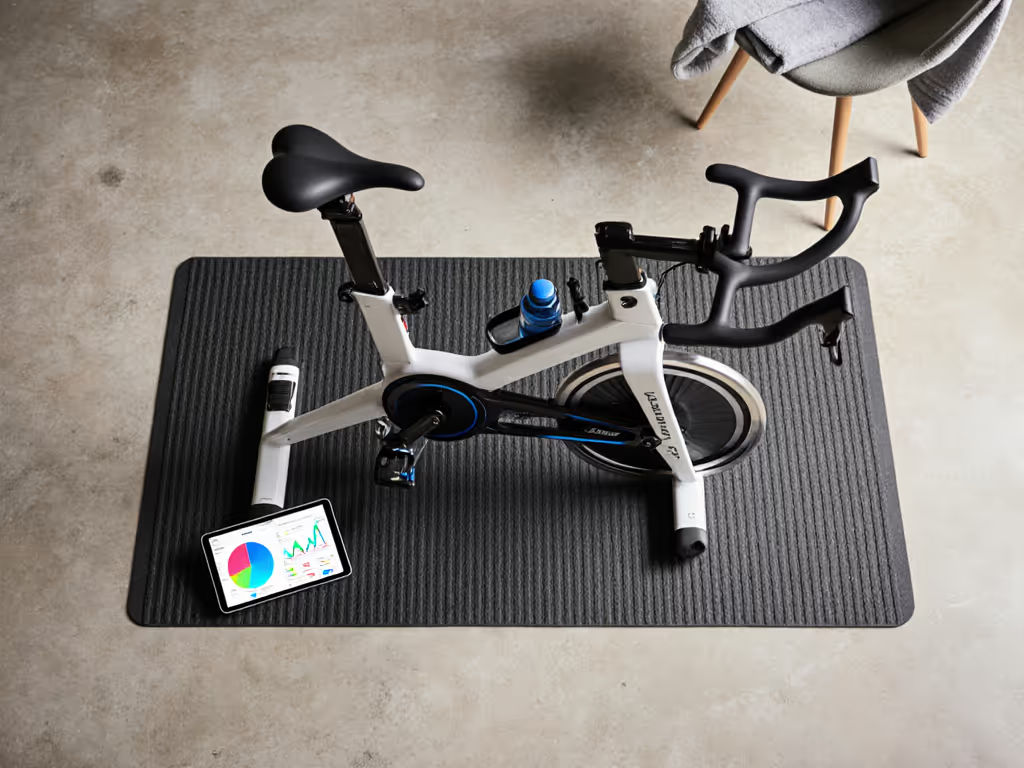
No apps require subscriptions to sync basic metrics. If your position still feels off, follow our bike setup and posture guide. And if your bike lacks Bluetooth? A $25 sensor like the COOSPO HRM (above) bridges the gap. It pairs with all free apps mentioned, no brand lock-in.
Safety of Open Platforms: Is My Data Protected?
"Free" shouldn't mean "exploited." Apps like Strava faced backlash for publicly mapping military bases via ride data. To stay safe:
- Enable private zones (in Strava/RWGPS settings) to hide home/work locations
- Disable auto-social sharing, post only intentional rides
- Use pseudonyms (e.g., "QuietRider42" not "John Doe, 123 Main St")
RWGPS and Trailforks default to private group sharing, only members see routes. Critical for apartment dwellers avoiding porch pirates. For a deeper dive into policies and protections, see our exercise bike data privacy guide.
Your Action Plan: Start Social, Stay Subscription-Free
Forget all-in-one platforms promising AI coaching and virtual worlds. For community that sticks, you need just enough:
- Pick one app that works offline (RWGPS for road, Trailforks for MTB)
- Join one local club focused on real-world meetups
- Set default privacy settings before your first ride
- Organize one low-stakes meetup (e.g., "Flat tire fix workshop")
I've watched neighbors thrive doing this, building friendships that outlast any subscription. One bought a picnic table for his building's courtyard after meeting 5 riding buddies through Strava clubs. All on free accounts.
The best cycling communities aren't built on payments. They're built on reliability. The app that's always there, works without fanfare, and lets you just ride, that's the one that compounds wins. Start simple, stay consistent. Your quiet morning ride might become someone else's lifeline.
Start small, stay quiet, and compound the wins.
Further Exploration
Ready to test-drive true community? Try this:
- This week: Join a Strava club in your city. Post one tip about riding in shared spaces.
- In 2 weeks: Organize a 15-min virtual coffee ride via RWGPS (no cost, no pressure).
No need to overhaul your setup. Just open the app, hit start, and let the community find you. Because when friction disappears? That's when the real riding begins.
Related Articles