Stop Guessing VO2 Max: Exercise Bike Biometric Accuracy Test
By Diego Santos • 29th Nov
Let's be honest, if your exercise bike's biometric monitoring feels more like a lucky guess than precise data, you're not alone. Many riders I work with struggle with unreliable metrics that make tracking progress feel frustrating. In this advanced cycling metrics comparison, I'll show you exactly what to expect from different setups so you stop wasting energy on guesswork and start building confidence in your real progress.
Why Your Bike's Heart Rate Data Might Be Lying to You
Q: Are consumer exercise bike biometrics actually reliable?
A: The short answer: sometimes, but often not as much as you'd hope. Research shows heart rate monitors vary significantly in accuracy (especially during cycling). To get cleaner readings on any bike, follow our heart rate calibration checklist. Consumer wearables like wrist-based trackers often have a mean absolute error (MAE) between 4-13 bpm depending on the device and activity.
A 2023 study comparing smart wristbands to medical-grade equipment found MAPE (Mean Absolute Percentage Error) values exceeding 13% during running, well above the 10% threshold considered reliable. During cycling specifically, accuracy drops further due to arm position and movement patterns.
Here's what the research consistently shows:
- Chest straps (like Polar H7) remain the gold standard with accuracy within 1 bpm of ECG readings
- Wrist-worn devices (Apple Watch, Fitbit) lose reliability during cycling versus running
- Handlebar sensors on exercise bikes often misread due to grip pressure changes
- Optical sensors struggle most with darker skin tones and higher intensity efforts
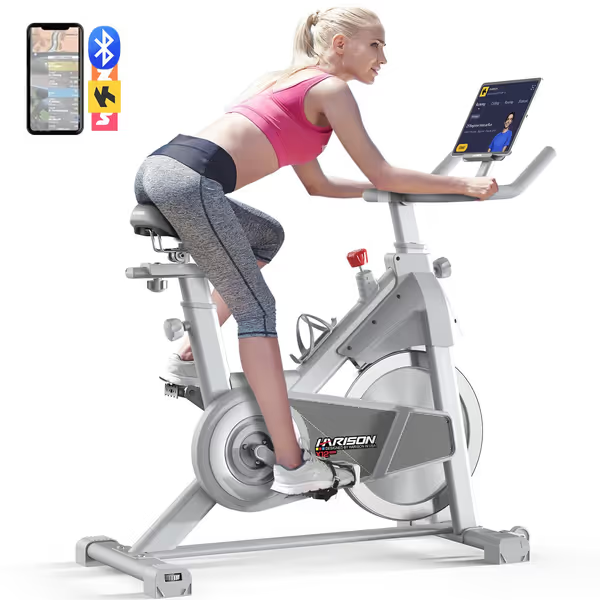
HARISON HR-X12 Magnetic Stationary Bike
Quiet, app-compatible indoor cycling for a future-proof home workout.
$337.99
Weight Capacity380 lbs
Weight Capacity380 lbs
Pros
Ultra-quiet magnetic resistance via HARISON MUTE Technology.
Bluetooth connects to popular fitness apps like Zwift.
Quick 20-minute assembly, 80% pre-assembled.
Cons
Mixed user opinions on long-term comfort.
Customers find the exercise bike's build quality positive, with one describing it as a solid entry-level bike. Moreover, the assembly process is straightforward. However, opinions about comfort are mixed.
Customers find the exercise bike's build quality positive, with one describing it as a solid entry-level bike. Moreover, the assembly process is straightforward. However, opinions about comfort are mixed.
Q: Does my gender affect biometric accuracy?
A: Yes, and this rarely gets mentioned. That same 2023 study found women's heart rate readings were significantly less accurate during running (13.35% MAPE) versus men (8.54% MAPE). While cycling-specific gender data is limited, the pattern suggests women may need to be extra cautious interpreting optical sensor data.
VO2 Max Estimation: More Art Than Science
Q: Can I trust my bike's VO2 max estimation accuracy?
A: Not really. VO2 max estimates from consumer equipment are educated guesses at best. They're calculated from heart rate, power output, and demographic data, not actual oxygen consumption measured in a lab.
A study in JMIR Formative Research concluded: "None of those tested [wearable heart monitors] was as accurate as an electrode-containing chest monitor" for VO2 max estimation. The margin of error often exceeds 15%, meaning your "50" could realistically be anywhere from 42-58. Confused by what your console reports? See exercise bike metrics explained for plain-English definitions and accuracy tips.
Q: What biometrics actually matter for home riders?
A: Focus on consistency over precision. For most apartment-friendly cycling:
- Power (watts) matters most if your bike supports it
- Heart rate zones are useful if you calibrate with perceived exertion
- Cadence consistency reveals technique improvements
- Perceived exertion (how hard it feels) often beats questionable metrics
"Start small, stay quiet, and compound the wins."
The rider who tracks imperfect but consistent data will outperform the one chasing perfect metrics that disappear when they switch apps. Not sure which numbers to prioritize? Compare watts vs heart rate to match metrics to your goals.
Getting Reliable Data Without Losing Your Sanity
Q: How can I improve accuracy without expensive gear?
A: Try these low-friction fixes:
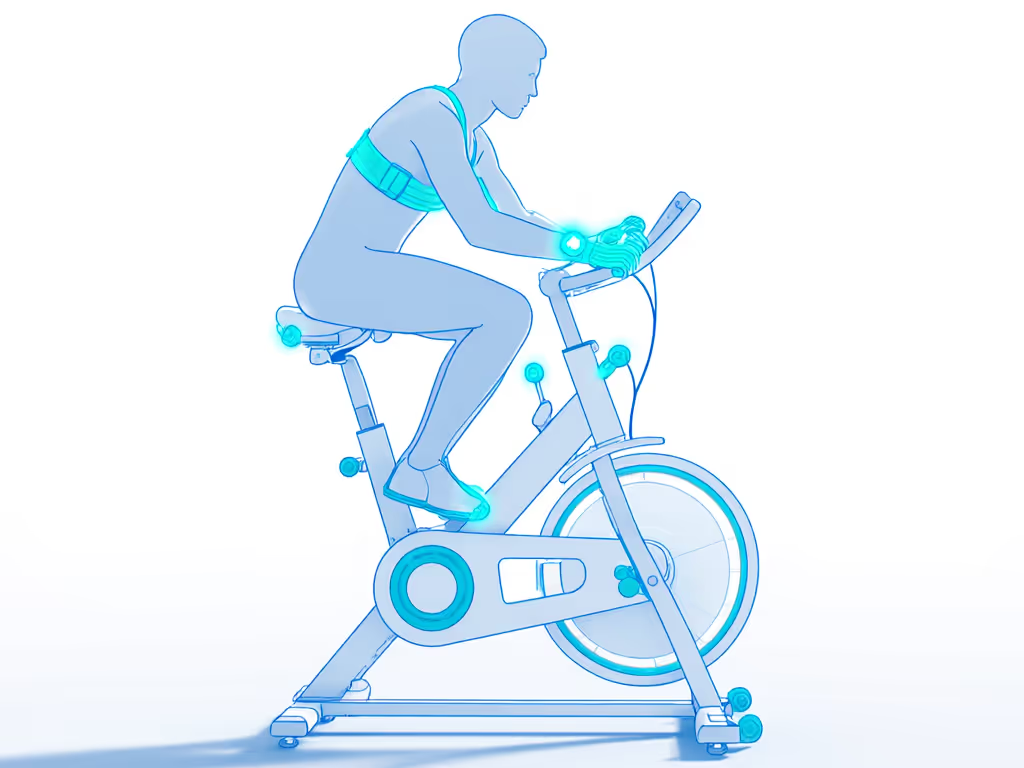
- Place sensors correctly: Chest straps above the sternum (not under the armpit)
- Moisten optical sensors slightly before riding
- Avoid tattooed areas for optical monitors
- Cross-check with manual pulse checks during cool-down
- Track trends, not single numbers (consistency beats precision)
I helped a neighbor ditch his "smart" bike with terrible metrics by pairing a $30 Bluetooth chest strap with a basic tablet. No more guessing VO2 max, just three reliable metrics he checked daily. Four quiet weeks later, he bought pedals, not subscriptions.
Q: What's the simplest reliable setup for small spaces?
A: For apartment dwellers juggling kids and neighbors:
- For power measurement: Look for bikes with claimed ±2% accuracy (like the Elite Suito-T trainer with its ±2.5% margin)
- For heart rate: Use a Bluetooth chest strap with your preferred app
- For quiet operation: Magnetic resistance bikes like the HARISON HR-X12 minimize vibration that disrupts sensor accuracy
- For data flow: Prioritize bikes with Bluetooth FTMS so metrics sync across apps
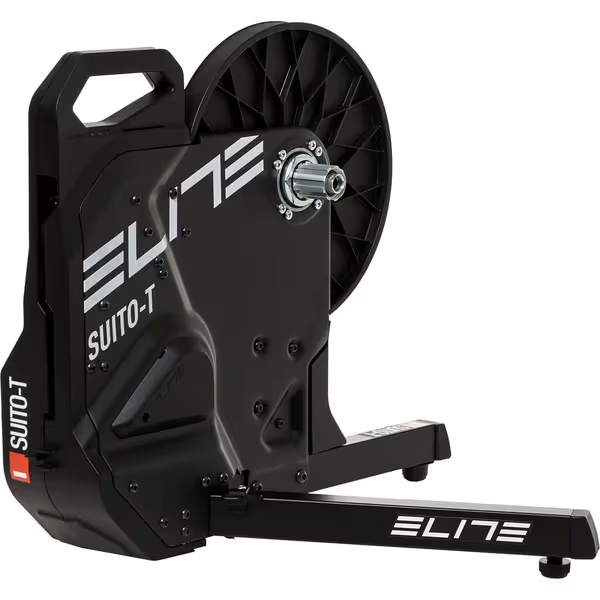
Elite Suito-T Direct-Drive Smart Trainer
Quiet, compact trainer with broad bike compatibility for immersive indoor cycling.
$699.99
4
Power Accuracy±2.5%
Power Accuracy±2.5%
Pros
Universal compatibility with road, gravel, and mountain bikes.
Quiet direct-drive operation for undisturbed training.
Open ANT+ & Bluetooth for seamless app integration.
Cons
Setup can be complex; not truly plug-and-play.
Customers find the indoor cycling trainer to be of good quality. The setup process receives mixed feedback, with some saying it's easy while others note it's not plug-and-play as advertised. Moreover, the trainer's functionality, connectivity, and noise level also get mixed reviews, with some reporting it works well while others say it stops working and has noise issues. Additionally, customers report difficulties with resistance control and speed simulation, particularly with rear derailleur adjustment.
Customers find the indoor cycling trainer to be of good quality. The setup process receives mixed feedback, with some saying it's easy while others note it's not plug-and-play as advertised. Moreover, the trainer's functionality, connectivity, and noise level also get mixed reviews, with some reporting it works well while others say it stops working and has noise issues. Additionally, customers report difficulties with resistance control and speed simulation, particularly with rear derailleur adjustment.
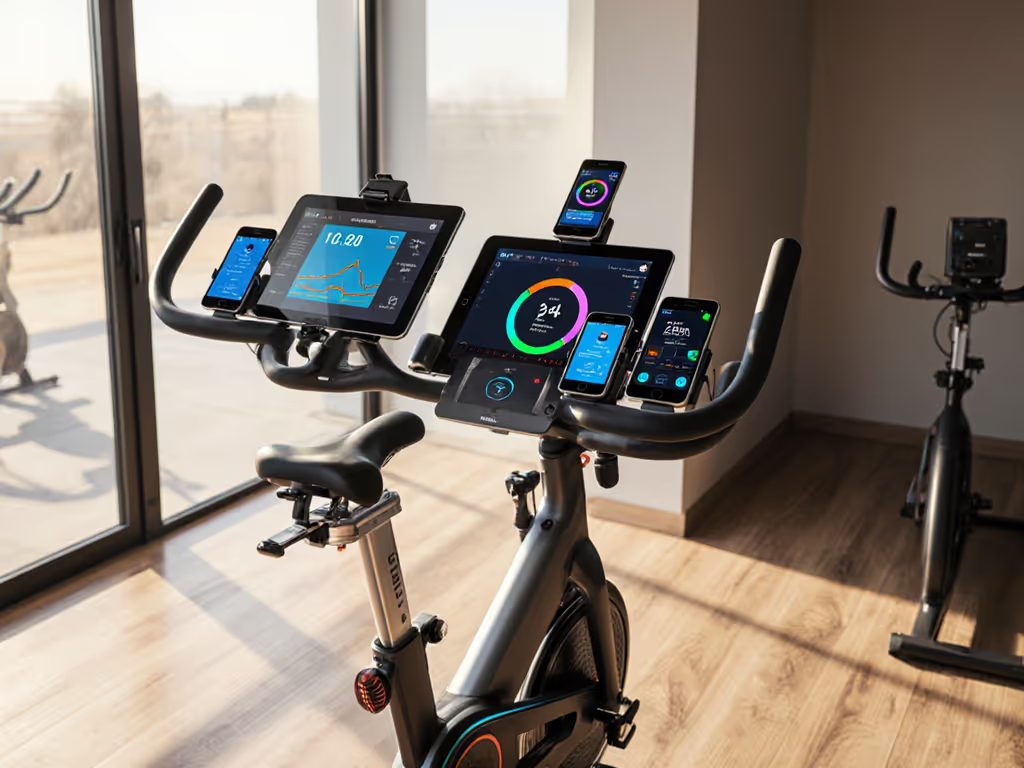
Skip the bundled screen hype. A humble tablet with TrainerRoad or Rouvy gives better metrics than most proprietary consoles. If subscriptions worry you, evaluate budget smart bike alternatives with a 3-year cost breakdown. And please, don't pay for "advanced analytics" that vanish when you cancel the subscription.
When Good Metrics Go Bad
Q: Why do my numbers suddenly change after firmware updates?
A: Vendor lock-in strategy. Many manufacturers intentionally degrade third-party app functionality after updates. I've seen riders lose power calibration data overnight because they weren't using the branded app.
Your defense:
- Check FE-C protocol support before buying
- Use open-source apps like Golden Cheetah for data analysis
- Record baseline metrics before updates
- Factory reset if metrics go haywire after update
Q: How often should I recalibrate?
A: Monthly for power sensors, but only if your bike allows it. If precision matters, shortlist bikes from our verified power accuracy picks tested for serious cyclists. Most magnetic resistance bikes don't support user calibration (another reason I prefer direct-drive trainers for serious tracking). Check your manual for recalibration procedures; if it's not mentioned, assume you're stuck with the factory calibration.
Trusting What Matters Most
Here's what I've learned helping hundreds of apartment riders build quiet routines: Consistency beats complexity. You don't need perfect VO2 max numbers, you need a setup you'll use daily without noise complaints from downstairs.
The most accurate metric is the one you actually see improving week after week. That rider who rode consistently with basic metrics? His estimated VO2 max increased 8% in 12 weeks, not because of fancy sensors, but because he stopped guessing and started showing up.
Stop chasing lab-grade precision in your living room. Start simple, stay consistent. Your progress will speak louder than any questionable biometric reading.
Further Exploration
- Try a 7-day "metrics fast" using only perceived exertion
- Compare your bike's heart rate against a manual pulse check
- Test different sensor placements during your next cool-down
What tiny win will you compound this week? I'd love to hear what works in your quiet space.
Related Articles